What Is a Tube Laser Cutting Machine? A Technical Guide to D-Tube Precision and Risk Control
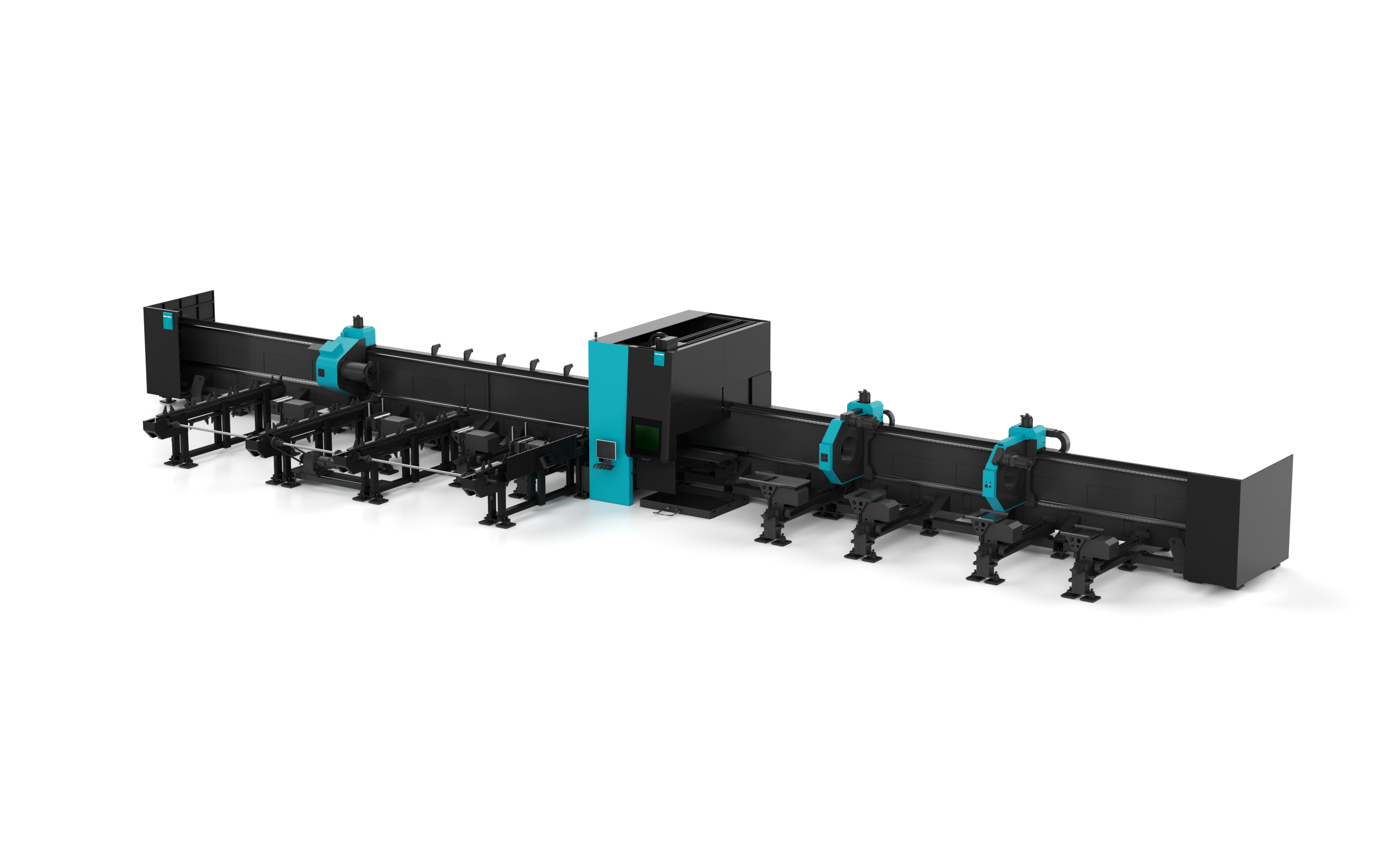
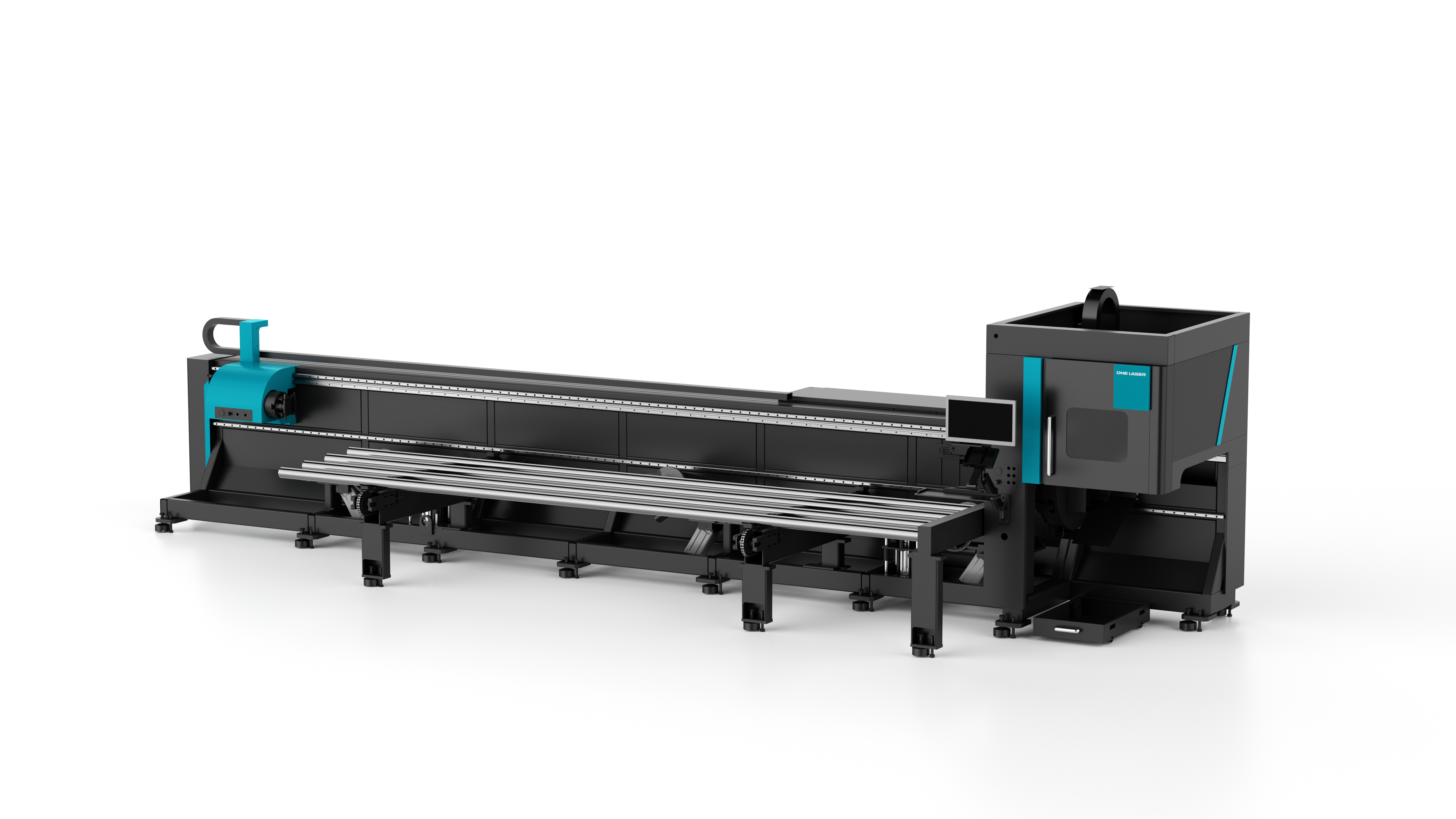
A tube laser cutting machine is a fiber laser cutting system that holds metal tube in rotating CNC chucks and cuts along the tube axis instead of across a flat pallet. It pairs a laser source and cutting head with one or more chucks, a synchronized support system and tube-specific nesting software, so round tube, square tube and open profiles can be cut, coped and beveled in a single setup. The D-Tube series from DNE Laser (Guangdong) Co., Ltd. — brand name DNE LASER — is a fiber tube laser platform offered in four model families, from the small-diameter D-Tube F to the 510 mm class D-Tube 520.
This guide is written for buyers in the research and evaluation stage of a tube project: the engineer who has to turn a part drawing into a machine specification, and the procurement team who has to prove that the specification controls risk. It covers what the machine is, where tube processing genuinely diverges from sheet metal cutting, which parameters decide whether a part can be produced at all, and how precision, remnant loss, reliability and operator safety are handled on the D-Tube platform.
Problem Definition: Why Tube Projects Fail Before the Laser Is Blamed
Most tube cutting problems are specification problems, not laser problems. The cut edge looks wrong, the corner wanders, the last section of a long bar ends up as scrap, or two operators are needed to load a heavy section — and the investigation starts at the cutting head when the actual cause sits earlier in the process chain.
Four failure modes account for most of them:
- Clamping loss. A chuck that does not center the tube, or does not hold a constant clamping force, lets the section rotate or creep during the cut. On square tube the error appears as a twisted face; on thin-wall round tube it appears as an oval.
- Sagging over span. Long, heavy tube deflects between the chuck and the cutting zone. Without support that follows the cut, the beam meets the tube at the wrong height and the kerf widens.
- Remnant waste. If tube can only be clamped at one position, a fixed unusable length remains at the tail of every bar. In high-volume steel tube cutting that tail is a recurring material cost, not a one-off nuisance.
- An uncontrolled cutting zone. The cutting zone of a tube machine is open by design. Sliding doors, viewing windows and interlocks are therefore part of the specification, not an accessory added at the end.
The practical consequence: specify a tube laser as a process system — chuck, support, software, monitoring and guarding — not as a laser power figure with a tube attachment bolted on.
Industry Background: Why Tube Capacity Is Now Specified More Carefully
Tube cutting has shifted from a secondary operation in general fabrication to a dedicated production step. DNE LASER lists agricultural machinery, automotive, construction machinery, machinery and plant engineering, transport systems, telecommunications equipment, construction, kitchenware and aerospace manufacturing as the industries its tube platform is applied to. As the part mix hardens and tolerance requirements tighten, buyers stop asking for “a laser” and start asking which machine geometry fits which tube envelope.
Two external signals shape that conversation. First, market scale: Fortune Business Insights sizes the global laser cutting machine market at USD 7.44 billion in 2026 and projects USD 18.43 billion by 2034, a 12.00% CAGR. Other research houses publish materially different absolute values and forecast horizons for the same category, so any single figure should be read together with its own scope statement rather than averaged into a consensus. The same publisher places Asia Pacific at a 37.60% share of the market in 2025, which is consistent with the region's role as the main equipment sourcing hub.
Second, compliance. Machine-level conformity is only one layer. Industrial laser systems sold in the United States must comply with 21 CFR 1040.10 and file product reports with the FDA Center for Devices and Radiological Health, while imports are classified under HS 8456.11 for laser-operated machine tools that remove material. A tube project that ignores these layers discovers them at customs or at commissioning.
Detailed Solution: Machine Architecture and Where Tube Diverges from Sheet
Five mechanical differences that change the specification
A tube laser is not a sheet laser with a rotary axis added. The differences below are the reason a separate specification is needed:
- The workpiece moves as well as the head. On a flatbed, the sheet is static and the gantry carries all motion. On a tube machine the chuck rotates the workpiece while the cutting head travels, so positioning accuracy has to be defined on both sides of the loop.
- Clamping replaces nesting as the first accuracy variable. Sheet accuracy depends mainly on machine geometry and nesting. Tube accuracy depends first on whether the section is held concentrically and without deformation.
- Support must follow the cut. A tube spans a gap between chuck and cutting head; the span changes as the cut advances. Synchronized auxiliary support exists to keep that span stable.
- Material loss is geometric, not just nesting-based. Remnant is set by where the chucks can still grip, which is why chuck count and coordinated chuck motion directly affect material yield.
- The cutting zone is exposed. Sheet machines usually enclose the process; tube machines cannot fully, so guarding and interlocking carry more of the safety burden.
How the D-Tube platform is built
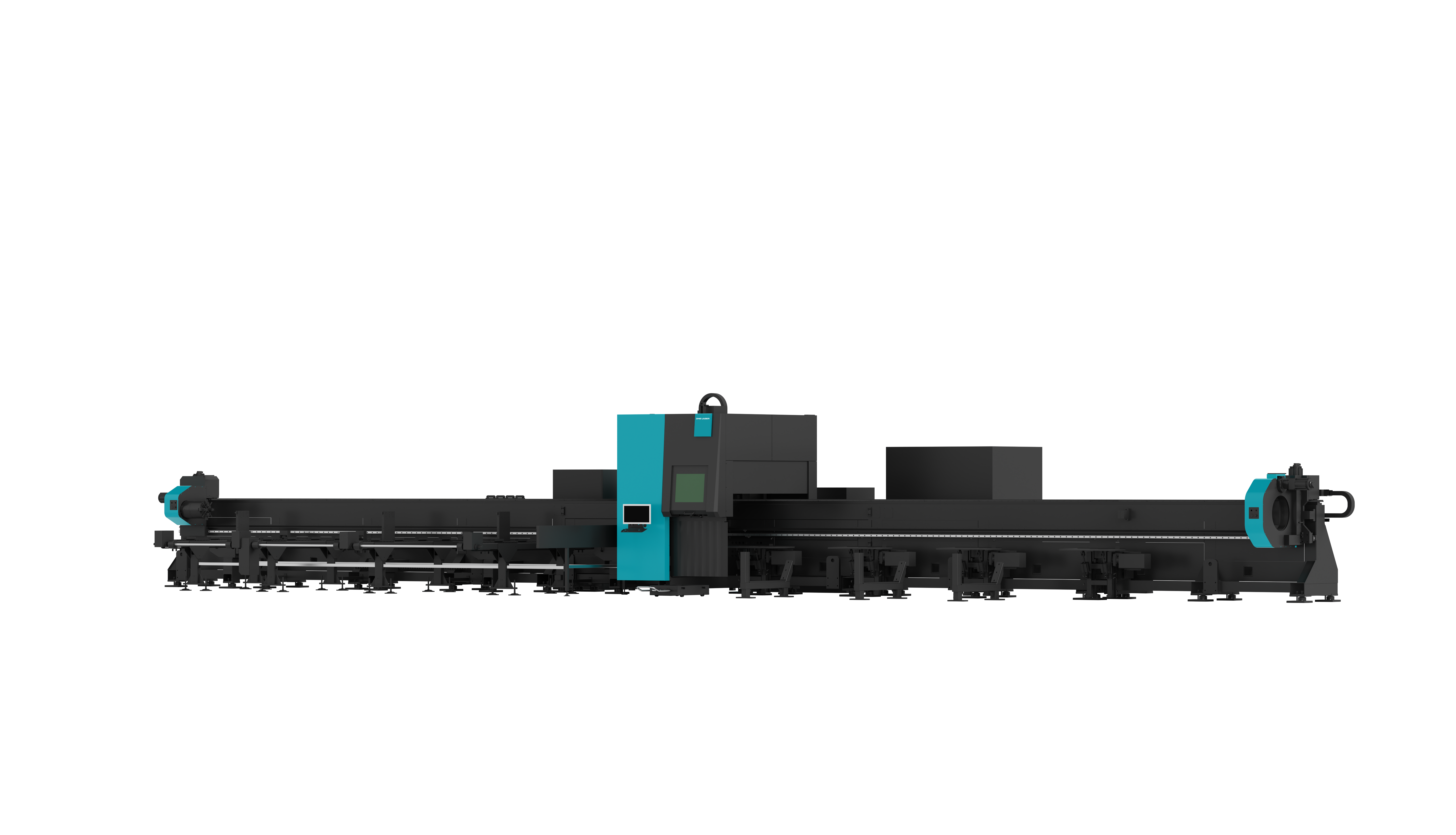
Precision on the D-Tube series starts with high-precision linear guides that carry the cutting head and hold its path over long travel distances — the reason the platform publishes X/Y-axis positioning accuracy of ±0.05 mm/m and repeated positioning accuracy of ±0.03 mm/m across the D-Tube F, 240, 360 and 520 families.
The second layer is clamping. The D-Tube uses sealed automatic centering chucks with constant clamping force. Sealing matters in a metal workshop where dust and coolant are constant; automatic centering matters because manual centering is a per-bar judgement call that cannot be repeated. Constant clamping force matters most on thin-wall tube, where an over-tightened chuck deforms the section and an under-tightened one allows slip.
The third layer is support. Synchronized auxiliary support travels with the cutting position so the tube does not deflect between the chuck and the cut. On long bars this is what separates a stable kerf from a wandering one.
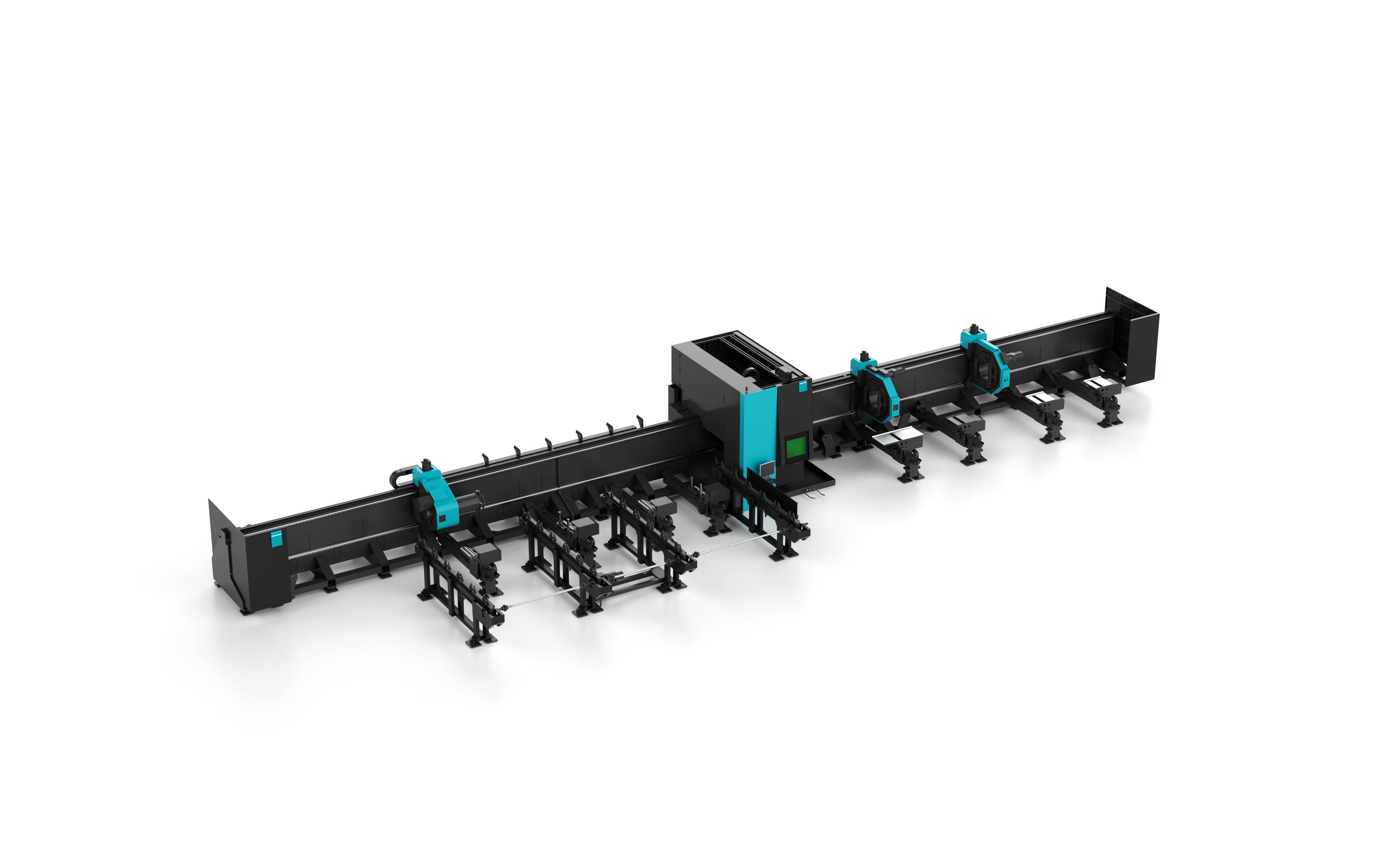
The fourth layer is remnant control. Multi-chuck coordinated cutting lets the chucks hand the workpiece to each other, so the remaining tail can still be pushed into the cutting zone instead of being clamped out of reach. D-Tube models are configured with 2, 3 or 4 chucks depending on the family and the application, and the loading and unloading lengths are specified per configuration.
Risk control: reliability, software, training and guarding
Precision decides whether a part can be made; risk control decides whether the machine keeps making it. Six systems carry that load on the D-Tube platform:
- Remote status monitoring with early fault warning. Machine condition is visible without waiting for a stoppage, which shortens the gap between a developing fault and a maintenance action.
- Factory performance testing and calibration before delivery. Full-process performance testing, chuck and cutting accuracy calibration, a continuous operation trial run of the complete machine and compliance verification of core component brands are completed before shipment.
- Customizable cutting software with real-time adjustable process parameters. Parameters can be adjusted during the process rather than locked before it, which is what makes a mixed round-tube, square-tube and profile workload practical on one machine.
- Specialized training. Operator training is delivered as part of installation and commissioning, alongside remote technical support and scheduled maintenance.
- CE-compliant safety sliding doors and radiation-proof windows. The operator is separated from the open cutting zone without losing visual control of the process.
- Lifecycle support. Core component warranty, remote troubleshooting, on-site service and lifetime technical upgrade and process optimization support.
Step-by-Step Breakdown: Specifying a Tube Laser for a Real Project
Step 1 — Fix the tube envelope before discussing anything else
Start with the diameter range, the square or rectangular range, wall thickness, bar length and finished part weight. The D-Tube F covers Φ8–Φ120 mm / □8×8–□120×120 mm (100 kg chuck load), the D-Tube 240 covers Φ15–Φ230 mm / □15×15–□230×230 mm (300 kg), the D-Tube 360 covers Φ40–Φ350 mm / □40×40–□350×350 mm (1200 kg) and the D-Tube 520 covers Φ50–Φ510 mm / □50×50–□510×510 mm (1500 kg). A specification that skips this step usually oversizes the machine — and pays for envelope it will never use.
Step 2 — Match laser power to wall thickness and duty cycle
Power is a throughput and edge-quality decision, not a headline number. DNE LASER configures laser power as part of the tube solution, and its fiber platform range covers 3, 6, 12, 20 and 30 kW. Thin-wall tube at high speed and heavy-wall structural section rarely point to the same configuration, so the power class should follow the dominant wall and the required metres per shift.
Step 3 — Decide chuck count and the remnant strategy
Chuck count is the lever on material yield. Two chucks suit short parts and simple work; three or four chucks allow coordinated handing so the tail can be re-clamped and cut. On steel tube cutting at volume, the difference between a usable and an unusable tail is measured in tonnes per year, not millimetres.
Step 4 — Specify support, loading and software together
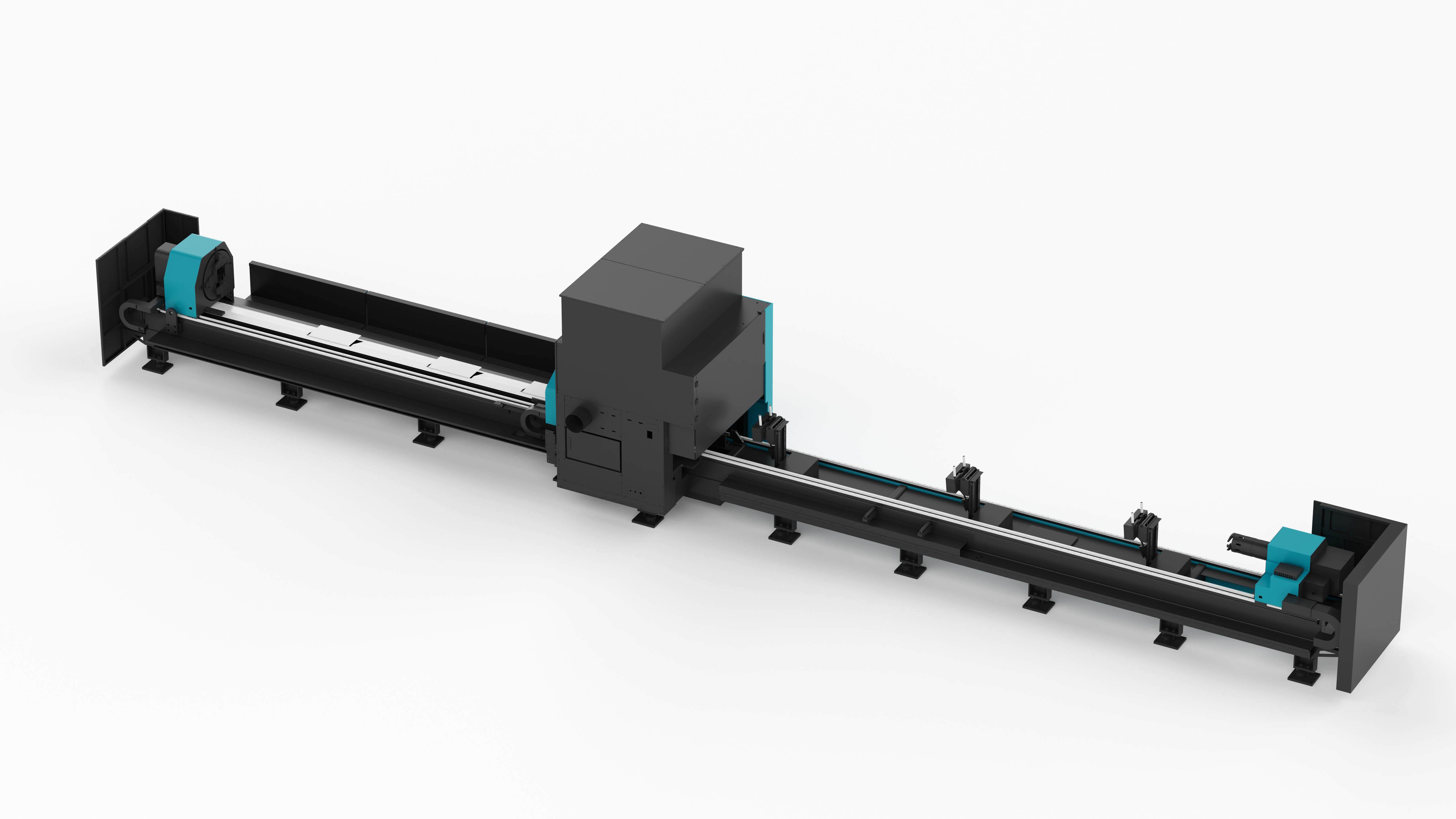
Follow-up support and centering devices for assisted loading, optional fully or semi-automatic loading systems, automatic unloading and remnant handling, and customized tube nesting software are all part of the machine configuration rather than aftermarket add-ons. Specifying them together is what makes 24/7 continuous automated operation realistic instead of theoretical.
Step 5 — Write acceptance criteria into the purchase order
Acceptance is where a tube project is won or lost. The measurable criteria are positioning accuracy (±0.05 mm/m), repeated positioning accuracy (±0.03 mm/m), chuck load, and confirmation that factory performance testing, precision calibration and a continuous operation trial run were completed before shipment. Add the monitoring function, the training scope, the warranty on core components and the guarding configuration. If it is not written down, it cannot be verified on arrival.
Use Cases: Where a Tube Laser Changes the Production Plan
The project types that most often justify a dedicated tube platform are tube processing line upgrades and retrofits, smart tube processing lines for new factories, precision metal tube component manufacturing, and large-scale structural steel tube processing. In each case the machine is being bought for a workflow, not for a single part.
- Automotive and parts manufacturing. A customer in Vietnam runs 9 units across sheet and tube platforms, including the D-Tube 240, and reports a 15% improvement in production efficiency after one year of use, citing faster cutting speed and low maintenance.
- Industrial automation and precision structures. A customer in Mexico operates 6 units including the D-Tube 360 for data infrastructure and logistics automation components. Three sets have been in service for three years, and three more were purchased afterwards — the same efficiency improvement was cited.
- Structural and construction-related fabrication. Long bars, heavy sections and thick walls put the emphasis on chuck load, support and remnant control rather than on maximum cutting speed.
- Kitchenware, HVAC-type light fabrication and telecommunications equipment. Thin-wall tube and small-diameter work put the emphasis on constant clamping force, because deformation at the chuck becomes a visible defect downstream.
DNE LASER's tube platform is offered as OEM, ODM or customized tube processing solution design, with chuck type and quantity, laser power, loading and unloading configuration, bevel cutting and cutting range all open to specification. The ±45° bevel cutting function is optional and should be confirmed against the actual joint design before it is ordered.
Comparison Table: D-Tube Model Families
The table below uses published D-Tube specifications. It is intended for envelope screening, not for final selection — the final configuration depends on wall thickness, part weight and automation scope.
| Model | Chuck options | Round tube | Square tube | Theoretical max. chuck load | Loading length | Positioning / repeat accuracy | Bevel cutting |
|---|---|---|---|---|---|---|---|
| D-Tube F (120 / 240 / 360) | 2 | Φ8–Φ120 / Φ12–Φ240 / Φ40–Φ350 mm | □8×8–□120×120 / □12×12–□240×240 / □40×40–□350×350 mm | 100 / 300 / 1000 kg | 6.5 m | ±0.05 mm/m / ±0.03 mm/m | Optional |
| D-Tube 240 | 2, 3 | Φ15–Φ230 mm | □15×15–□230×230 mm | 300 kg | 6.5 / 9.2 / 12.5 m | ±0.05 mm/m / ±0.03 mm/m | Optional |
| D-Tube 360 | 2, 3, 4 | Φ40–Φ350 mm | □40×40–□350×350 mm | 1200 kg | 6.5 / 9.2 / 12.5 m | ±0.05 mm/m / ±0.03 mm/m | Optional |
| D-Tube 520 | 3, 4 | Φ50–Φ510 mm | □50×50–□510×510 mm | 1500 kg | 12.5 m | ±0.05 mm/m / ±0.03 mm/m | Optional |
Read the table in two passes. First, eliminate models whose round or square range cannot hold the largest section in the part mix. Second, compare chuck load against the heaviest finished bar, not the average — the theoretical maximum chuck load is a ceiling, and the practical working load should stay below it.
FAQ
Does a D-Tube tube laser cutting machine meet CE requirements, and is that enough for my market?
The D-Tube platform is specified with CE-compliant safety sliding doors and radiation-proof windows, and machine-level compliance is verified during factory testing before delivery. Machine conformity is not the whole answer, however: destination-market rules still apply on top of it. For the United States, industrial laser systems must comply with 21 CFR 1040.10 and file product reports with the FDA CDRH, and imports are classified under HS 8456.11 for laser-operated machine tools. Confirm the exact market-access requirements for your destination during the RFQ stage rather than after the machine ships.
Can one D-Tube machine cut round tube, square tube, thin-wall tube and bevels?
Yes, within the envelope of the model selected. D-Tube models are specified for round tube and square tube ranges that vary by family — for example Φ15–Φ230 mm and □15×15–□230×230 mm on the D-Tube 240, and Φ50–Φ510 mm and □50×50–□510×510 mm on the D-Tube 520 — and the platform is described as capable of high-precision cutting of various metal tubes and profiles, including irregular shapes. Bevel cutting is an optional function and should be confirmed against the joint design before ordering, because it changes both the configuration and the price.
What actually drives the budget of a tube laser cutting machine?
Four configuration decisions carry most of the cost: laser power, chuck type and quantity, loading and unloading automation, and whether bevel cutting is included. Cutting range and overall machine configuration add on top. DNE LASER builds tube solutions on an OEM, ODM or customized design basis, so the commercially meaningful step is to fix the tube envelope and the automation scope first, then price the machine against that specification. A quote built before those two decisions are made will usually be revised.
Can we validate the machine on our own tube samples before shipment?
Validation belongs in the factory acceptance stage. DNE LASER carries out full-process factory performance testing, chuck and cutting accuracy calibration, a continuous operation trial run of the complete machine and compliance verification of core component brands before delivery, and operates a demo center for cutting trials. Buyers should request that the trial run use representative samples from their own part mix, and should record measured accuracy against the published ±0.05 mm/m positioning and ±0.03 mm/m repeated positioning figures. Minimum order quantity is one unit, so a single-machine project can be handled on the same acceptance basis as a multi-machine line.
What lead time and support should we plan for?
Lead time is quoted per order, because DNE LASER customizes it against actual order volume and project requirements — there is no single published figure, and any supplier quoting one without knowing the configuration is guessing. Plan the support side at the same time: on-site installation, commissioning and operator training, remote technical support and troubleshooting, scheduled maintenance, core component warranty, and lifetime technical upgrade and process optimization support. For a tube line feeding a 24/7 operation, the training and remote monitoring scope matters as much as the delivery date.
Next Step: Match the Machine to Your Tube Envelope
If you are evaluating a tube laser for a specific part mix, the fastest way to reduce risk is to compare the drawing against a real envelope and a real acceptance list. DNE LASER can review your round tube, square tube and thin-wall requirements against the D-Tube F, 240, 360 and 520 configurations, and quote on an OEM, ODM or customized basis.
Download the company and product overview: Introduction of DNE Laser V1.0 (PDF)
Email: eileen.yan@dne.global | Tel / WeChat / WhatsApp: +86 136-7014-5102 | www.dne.global
Factory: North of Nankun Nan 2nd Street, Lingang Industrial Community, Nanhai District, Foshan City, Guangdong, China.
Conclusion
A tube laser cutting machine is best understood as a clamping, support and software system wrapped around a fiber laser — which is why two machines with identical power ratings can produce very different parts. Precision on the D-Tube platform comes from high-precision linear guides, sealed automatic centering chucks with constant clamping force, synchronized auxiliary support and multi-chuck coordinated cutting that limits remnant material. Risk control comes from remote status monitoring with early fault warning, factory performance testing and calibration before delivery, customizable cutting software with real-time adjustable process parameters, specialized training, and CE-compliant safety sliding doors and radiation-proof windows.
For a buyer in the research and evaluation stage, the sequence is straightforward: fix the tube envelope, match power to wall and duty cycle, decide chuck count and remnant strategy, specify support and software together, then write the acceptance criteria into the order. DNE LASER (Guangdong) Co., Ltd. is a wholly owned subsidiary of the Swiss Bystronic Group headquartered in Shenzhen with its production base in Nanhai, Foshan, and supplies laser cutting machines, tube laser cutting machines, CNC bending machines and automation equipment to markets including Europe, North America, the Middle East, Southeast Asia and Africa.
Specifications quoted in this guide are published D-Tube series values. Final configuration, accuracy verification and compliance scope are confirmed against the specific machine order and destination market.
Have Questions or Need More Details?
Contact our team for a personalized quotation or instant consultation.
Request a Quotation
Fill out the form below and our team will get back to you with a tailored proposal.
WhatsApp Direct Chat
Prefer to chat in real-time? Message us on WhatsApp for instant assistance & quick answers.
- Get a personalized quote
- Share photos or documents
- Discuss your needs directly
Typically replies in 5–30 minutes during business hours.