Tube Laser Cutting Machine: A Heavy-Tube Project Application Guide
A tube laser cutting machine is a CNC laser cutting system that cuts round, square, rectangular and open-profile tube by focusing a fiber laser beam on the tube surface while the tube is clamped in chucks, indexed along its axis and rotated to the programmed cut position. In heavy-tube fabrication projects, machine performance is not decided by laser wattage alone. It is decided by how the machine holds a long, heavy tube, supports it along its length, and limits what is left over after the last part is cut.
This guide is written for metal fabricators evaluating tube laser cutting for project scenarios — structural frames, machine chassis, agricultural implements, transport equipment and similar work — where tube arrives in mill lengths, wall thickness is significant, and every meter of material carries cost. It defines the risk profile of heavy-tube work, maps those risks to D-Tube configuration features, and sets out how to run the evaluation as a project rather than as an equipment purchase.
DNE LASER (DNE Laser (Guangdong) Co., Ltd.), headquartered in Shenzhen with its production base in Nanhai, Foshan, manufactures laser cutting machines, tube laser cutting machines, press brakes, automation devices, laser welding machines and software, and is a wholly owned subsidiary of the Swiss Bystronic Group. The D-Tube series is the tube-cutting platform referenced throughout this guide.
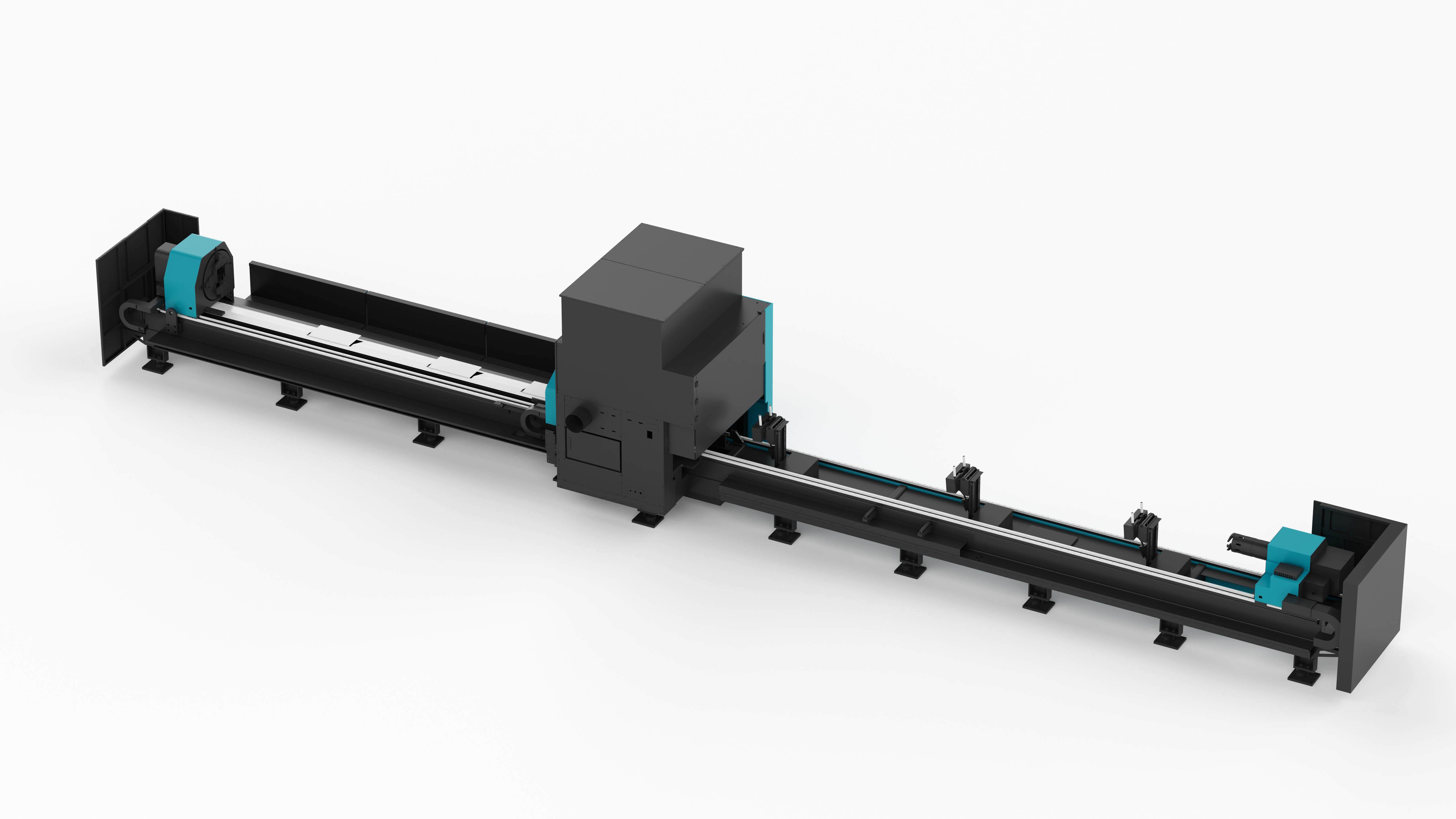
D-Tube tube laser cutting machine: chuck-based clamping, synchronized auxiliary supports and multi-chuck coordination for heavy-tube fabrication work.
Problem Definition: Why Heavy-Tube Work Punishes Weak Process Control
Laser cutting removes material along a programmed path. In heavy-tube work the difficulty is mechanical rather than optical. The workpiece is long, heavy and often asymmetric, and it must stay in exactly the same position relative to the beam for the entire duration of a cut that may run across several meters of tube.
That requirement creates a specific risk profile. DNE LASER identifies seven recurring failure modes in tube cutting operations: tube positioning errors during high-speed cutting, slippage or loosening of heavy tubes in the chuck, sagging or oscillation of long tubes affecting cutting accuracy, dust ingress into chucks causing component damage, safety incidents due to operational mistakes, material waste from tube cutting remnants, and long-term deformation of the machine bed during continuous operation.
Each of these is a production-cost event, not a theoretical concern:
| Process risk | What it looks like on the shop floor | What it costs |
|---|---|---|
| Tube positioning errors at cutting speed | Hole patterns drift along the tube axis; the first part is within tolerance and the last one is not | Scrap on long, high-value parts and rework on welded assemblies |
| Slippage or loosening in the chuck | A heavy tube rotates slightly under load or moves during piercing | Rejected cuts, damaged tube ends, lost machine hours |
| Sagging or oscillation of long tubes | The free length of the tube deflects or vibrates between supports | Accuracy loss mid-part and inconsistent cut quality along the length |
| Dust ingress into chucks | Metal dust and debris reach clamping components | Premature component wear, unplanned downtime, maintenance cost |
| Safety incidents from operator error | Access to the cutting zone during operation or exposure to laser radiation | Personnel risk, insurance exposure, regulatory consequences |
| Remnant material waste | A usable length of tube is discarded because the machine cannot safely clamp and cut it | Direct material cost added to every batch |
| Bed deformation over time | Precision drifts and recalibration frequency rises across years of production | Rising maintenance burden and declining process capability |
Decision rule: when a project is quoted on material utilization and repeatability, the six mechanical risks above determine the real cost per part far more than the nominal laser power on the specification sheet.
Industry Background: Tube Cutting Capacity Is Being Re-Specified, Not Just Purchased
Demand for laser cutting capacity continues to expand. Fortune Business Insights sizes the global laser cutting machines market at USD 7.44 billion in 2026 and projects USD 18.43 billion by 2034, a CAGR of 12.00%. Mordor Intelligence publishes a materially different series — USD 12.34 billion by 2031 at a 9.55% CAGR, with a base year that is not disclosed in the published extract. The two figures are not reconcilable from public material and should not be averaged; each is a directional signal for capacity planning, not a budget line.
Regional structure matters for sourcing. Asia Pacific held a 37.60% share of the laser cutting machine market in 2025, according to Fortune Business Insights, which keeps regional manufacturing capability directly relevant to equipment selection and supply continuity.
For import planning, laser-operated machine tools are classified under HS code 8456.11, the trade classification used to organise customs documentation and duty analysis for this equipment category.
On the demand side, DNE LASER supplies equipment to the global sheet metal processing market, with primary applications in the automotive, machinery and steel structure industries — the three sectors where heavy structural tube, chassis tube and frame tube are consumed in volume. Export activity covers the European Union, United States, Middle East, Southeast Asia and other international regions, and exports represent 45% of output.
What has changed in procurement behaviour is the time horizon. Tube cutting capacity is now commonly specified against a project pipeline that runs for several years, so the evaluation no longer ends at commissioning. Buyers increasingly ask how the machine will be supported in year three: whether chuck accuracy can be recalibrated on site, whether process parameters can be adjusted as the part mix changes, and whether spare-part and software support will still exist when the original machine generation has moved on. That is a long-term partnership question, and it belongs in the specification from the start.
Detailed Solution: Mapping D-Tube Controls to Each Heavy-Tube Risk
The D-Tube series is a fiber laser tube cutting platform with a configurable power range of 3–30 kW, matched to different tube cutting requirements. Its design logic is to answer each of the seven risks above with a specific mechanical or control measure rather than with a general accuracy claim.
1. Tube positioning errors at cutting speed
Positioning stability comes from the motion system. D-Tube uses high-precision linear guides combined with rack-and-pinion transmission to maintain stable motion during high-speed cutting, which is the operating condition where positioning errors normally appear. The result is a stated positioning accuracy of ±0.05 mm/m and a positioning acceleration of 1.0G.
2. Slippage and loosening of heavy tubes
Heavy tube fails at the clamp before it fails at the beam. D-Tube uses fully automatic centering chucks with a fully sealed design that provide a constant clamping force without loosening. Centering devices further improve tube clamping accuracy, so the tube axis is established consistently from the first part of a batch to the last.
3. Sagging and oscillation of long tubes
Long tube behaves as a beam with an unsupported span. Synchronized auxiliary support devices are used to prevent tube sagging and oscillation, keeping the cut zone stable across the full working length rather than only near the chuck.
4. Dust ingress into the clamping system
The fully enclosed chuck design prevents dust ingress and extends service life. This matters in heavy-tube work specifically, because thick-wall cutting generates more debris and the chuck is the component whose degradation is hardest to detect before it affects accuracy.
5. Safety incidents from operational mistakes
Safety sliding doors and radiation-proof windows compliant with CE standards are part of the machine enclosure, designed to prevent operational hazards during cutting. Because the controls are physical and interlocked with machine operation rather than dependent on operator discipline, they remain effective under production pressure.
6. Material waste from tube remnants
Multi-chuck coordinated cutting enables zero or minimal remnant material, reducing waste at the end of each tube. In practice this changes the material economics of a project: remnant losses are absorbed once and then repeated across every tube in every batch.
7. Bed deformation during continuous operation
The machine bed and crossbeam undergo high-temperature annealing and gantry milling to prevent deformation, which protects accuracy over years of continuous operation and reduces calibration frequency.
8. Fault visibility before failure
Remote equipment status monitoring with an early fault warning system gives the fabricator visibility of machine condition between service visits. DNE LASER also supplies customizable cutting software with real-time adjustable process parameters to minimise operator error, and core components sourced from well-known German, Japanese and domestic brands to support equipment reliability.
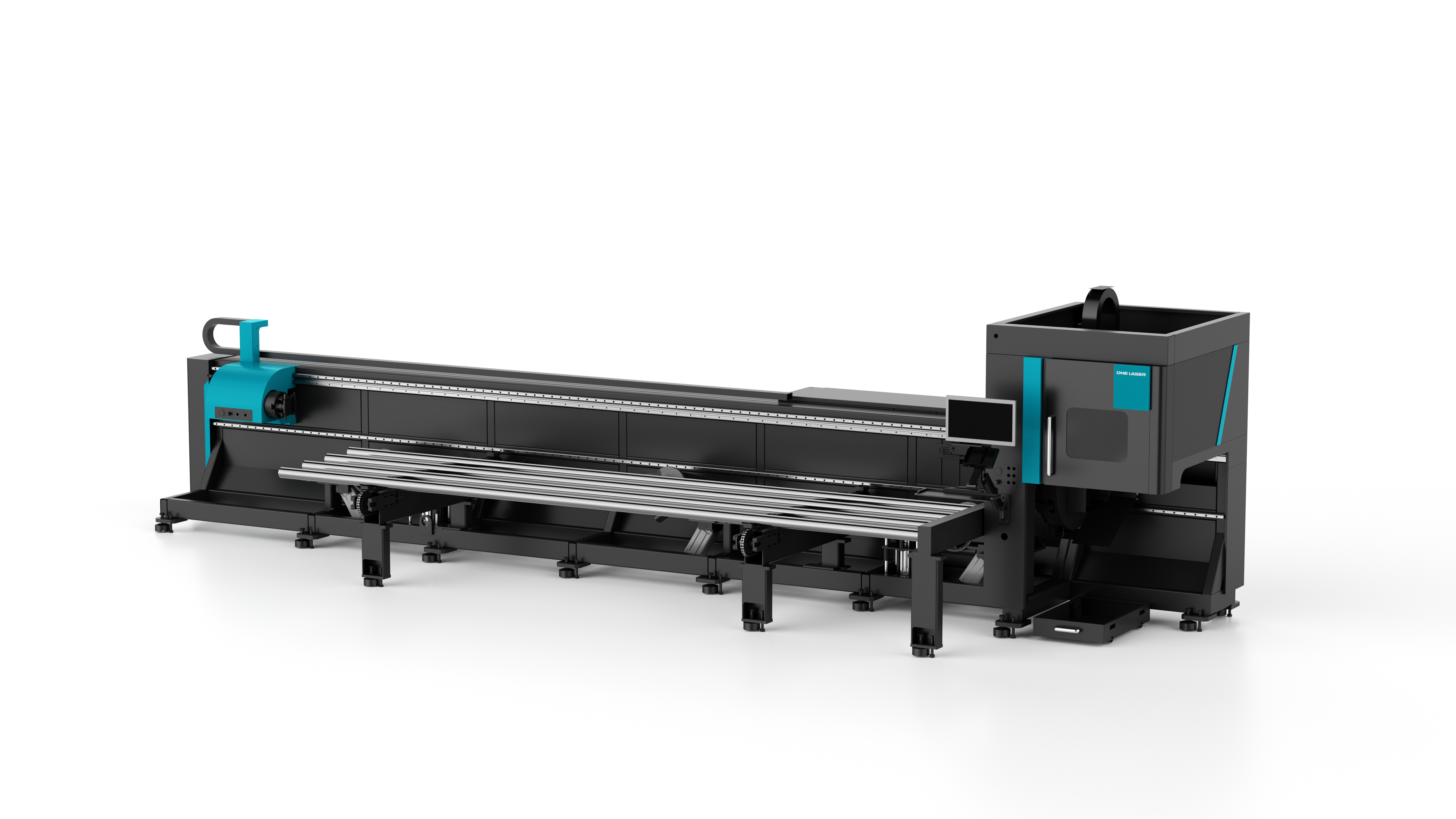
Sealed automatic centering chucks with constant clamping force, combined with synchronized auxiliary supports, address slippage and long-tube sagging on the same workholding platform.
D-Tube performance reference points (manufacturer data)
- Positioning accuracy: ±0.05 mm/m
- Positioning acceleration: 1.0G
- Automated loading cycle time: ≤ 30 s
- Configurable laser power range: 3–30 kW
- Zero/short remnant cutting: material utilization improvement of more than 20%
- Cutting efficiency: improvement of more than 50% compared with conventional tube cutting machines
Step-by-Step Breakdown: Running a Heavy-Tube Project from Specification to Stable Output
Machine features only convert into project performance if the evaluation is structured. The following sequence reflects how D-Tube projects are specified, accepted and sustained.
Step 1 — Define the tube envelope and the part mix
Start with the tube types the project will actually run: round tube, square tube, rectangular tube and open profiles, with wall thickness ranges and part lengths. The tube envelope determines chuck size, support spacing and the length of tube the machine must stabilise.
Step 2 — Build a risk register per part family
Assign each part family against the seven risks described earlier. A long, thin-wall frame member is dominated by sagging and oscillation; a short, thick-wall boss is dominated by clamping force and piercing stability. This prevents the specification from being driven by the most difficult part alone.
Step 3 — Size the chuck and support configuration
Confirm the number of chucks, the support positions and the centering arrangement against the longest and heaviest tube in the project. Multi-chuck coordination is also what enables zero or minimal remnant cutting, so this decision affects material economics as well as stability.
Step 4 — Agree the remnant and nesting strategy
Decide how the last part on each tube will be nested and whether the project will run to zero remnant or short remnant. Because zero/short remnant cutting improves material utilization by more than 20%, this step typically has a measurable effect on the project business case.
Step 5 — Specify factory acceptance testing
Quality control includes full-process factory performance testing, chuck and cutting accuracy calibration, a continuous operation trial run of the complete machine, compliance verification of core component brands, and testing in accordance with industrial tube cutting equipment safety standards. Acceptance criteria for D-Tube projects normally combine on-site inspection at the supplier's factory with commissioning at the buyer's factory.
Step 6 — Plan installation, commissioning and operator training
Technical support covers remote technical support and troubleshooting, on-site installation, commissioning and operator training. Training is not administrative: parameter handling and routine maintenance are what keep the first month's performance level intact in month twelve.
Step 7 — Ramp production and set preventive maintenance
Scheduled on-site maintenance, periodic recalibration and precision verification are the routine measures that hold accuracy over time. The annealed machine bed resists deformation and core components from established brands support a low failure rate, which reduces the maintenance workload that follows commissioning.
Step 8 — Lock the long-term support arrangement
Before handover, confirm the after-sales scope in writing: remote technical support and troubleshooting, on-site installation and commissioning, operator training, scheduled maintenance, core component warranty, and lifetime technical upgrades and process optimization. This is the part of the purchase that determines whether the machine still meets project tolerances after several production years.
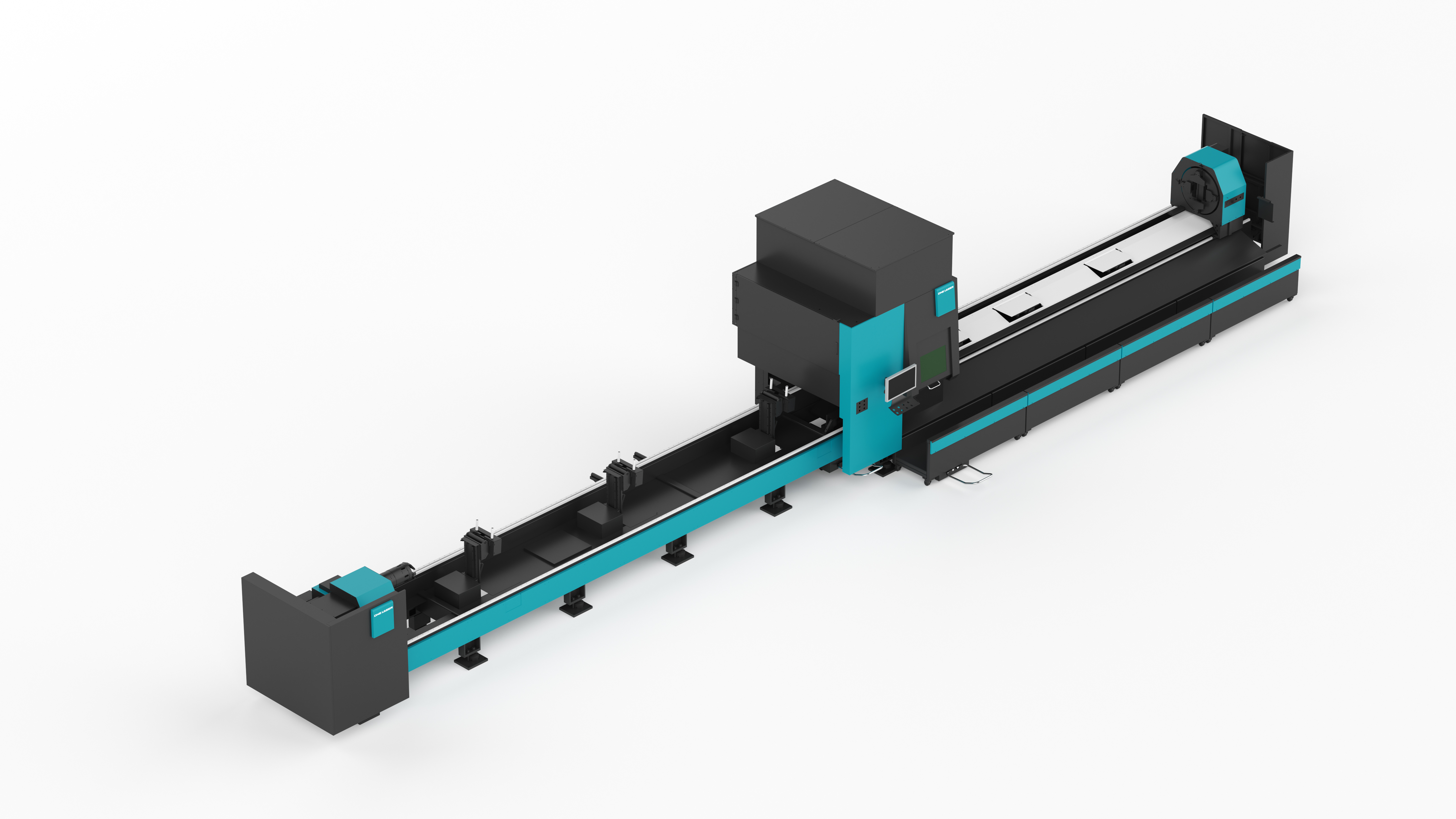
Cutting stability across the full tube length depends on synchronized supports and consistent clamping force, not on laser power alone.
Use Cases: Where the Configuration Pays Back
Agricultural machinery frames
Implement frames and linkages use heavy-wall square and rectangular tube in repeated batch patterns. The dominant risks are clamping stability on heavy sections and remnant loss at the end of each mill length, which makes chuck design and multi-chuck coordination the deciding features.
Automotive structural and chassis tube
Automotive work is driven by repeatability across high volumes. Positioning accuracy of ±0.05 mm/m and automated loading with a cycle time of 30 seconds or less support the throughput and consistency this segment requires.
Construction machinery booms and frames
Long, heavy tube sections create the largest unsupported spans, so synchronized auxiliary support devices and bed stability under continuous operation matter more here than in any other typical application.
Aerospace precision tube
Where tolerance is the primary constraint, the combination of high-precision linear guides, centering devices and precision calibration during factory testing is what supports the accuracy requirement.
Batch structural and irregular profiles
Projects mixing standard structural tube with irregular profiles benefit from compatibility with various tube types and from cutting software that allows real-time parameter adjustment as the profile changes.
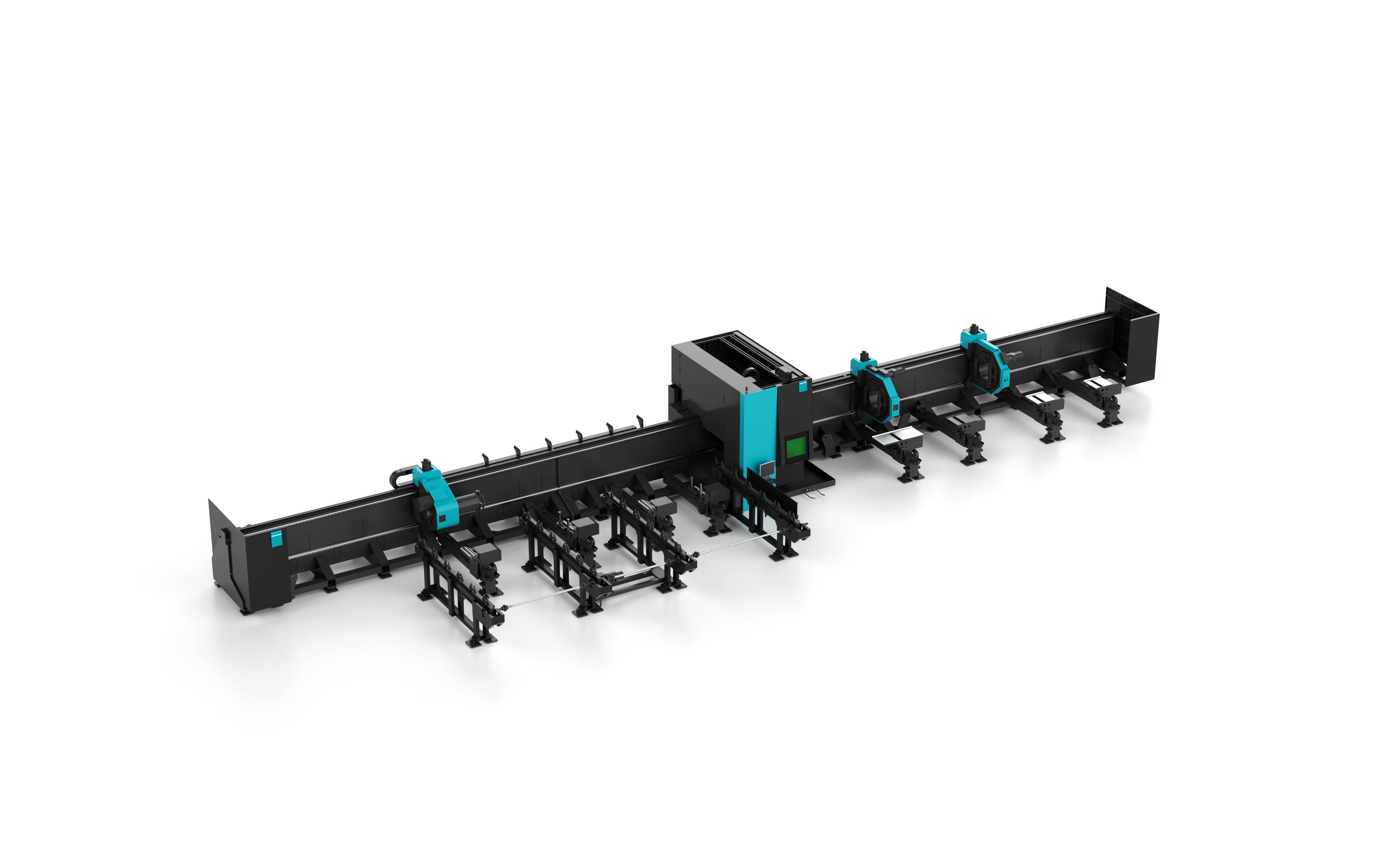
Multi-chuck coordinated cutting allows zero or short remnant output, which converts directly into material savings per tube.
Comparison Table: D-Tube Against Conventional Tube Cutting Options
The comparison below uses manufacturer data for D-Tube and general category characteristics for the two conventional alternatives. It is intended as a decision aid, not as a specification for any third-party machine.
| Comparison dimension | D-Tube tube laser cutting machine | Conventional standard laser tube cutting machine | Semi-automatic tube cutting equipment |
|---|---|---|---|
| Positioning accuracy | ±0.05 mm/m with high-precision linear guides and rack-and-pinion transmission | Lower positioning precision class | Dependent on manual setup and fixture quality |
| Remnant capability | Zero or minimal remnant through multi-chuck coordinated cutting; utilization improvement above 20% | No coordinated zero-remnant function | Remnant material typically discarded |
| Clamping stability on heavy tube | Sealed automatic centering chucks with constant clamping force, plus centering devices | Less stable synchronized clamping on heavy sections | Manual or semi-manual clamping |
| Long-tube support | Synchronized auxiliary supports prevent sagging and oscillation | Limited support for long spans | Operator-dependent support |
| Loading and unloading | Automated loading and unloading, cycle time ≤ 30 s | Less automated material handling | Manual handling |
| Tube type flexibility | Compatible with various types of irregular tubes and profiles | Narrower profile flexibility | Restricted to simple sections |
| Bed and structural durability | Annealed machine bed and crossbeam, gantry milled, resistant to deformation | Greater deformation risk under continuous load | Not designed for continuous industrial duty |
| Maintenance profile | Fully enclosed chuck, annealed bed and branded core components reduce maintenance workload | Higher calibration and maintenance frequency | Frequent manual adjustment |
| Initial investment | Slightly higher than traditional semi-automatic tube cutting equipment | Mid-range | Lowest |
| Total cost of ownership | Lower TCO through reduced material waste, lower labor input and reduced processing cost | Moderate | Higher material and labor cost per part |
| Best fit | Agricultural machinery, automotive and construction machinery tube; aerospace precision tube; batch structural and irregular tube; integrated smart tube processing lines | General tube cutting with less demanding remnant and accuracy requirements | Low-volume or non-critical tube cutting |
Frequently Asked Questions
What safety and compliance features should a heavy-tube laser cutting project require?
A tube laser cutting machine used in production should include safety sliding doors and radiation-proof windows compliant with CE standards, designed to prevent operational hazards during cutting. Factory testing should include testing in accordance with industrial tube cutting equipment safety standards, together with full-process factory performance testing, chuck and cutting accuracy calibration, a continuous operation trial run of the complete machine and compliance verification of core component brands. Buyers exporting into regulated markets should also confirm the destination market's own requirements before shipment; for the United States, industrial laser systems must comply with 21 CFR 1040.10 and file product reports with the FDA CDRH.
How does a tube laser cutting machine control sagging and slippage when cutting long, heavy tubes?
Sagging is controlled mechanically along the tube length, while slippage is controlled at the clamp. On the D-Tube series, synchronized auxiliary support devices prevent tube sagging and oscillation, and fully automatic centering chucks with a fully sealed design provide a constant clamping force without loosening. Centering devices improve tube clamping accuracy so the tube axis is established consistently. High-precision linear guides combined with rack-and-pinion transmission keep motion stable during high-speed cutting, supporting a positioning accuracy of ±0.05 mm/m.
Does zero-remnant cutting justify a higher initial investment than semi-automatic tube cutting equipment?
In most heavy-tube projects it changes the economics rather than simply adding cost. D-Tube carries a slightly higher initial investment than traditional semi-automatic tube cutting equipment, but multi-chuck coordinated cutting enables zero or minimal remnant output and increases material utilization by more than 20%. Automated loading and unloading reduces labor input, and the resulting processing cost per part is significantly lower, producing a lower total cost of ownership over the life of the machine.
What acceptance testing should be completed before a tube laser project goes into production?
Acceptance should combine factory verification and on-site verification. Factory quality control covers full-process factory performance testing, chuck and cutting accuracy calibration, continuous operation trial run of the complete machine, compliance verification of core component brands, and testing in accordance with industrial tube cutting equipment safety standards. The acceptance criteria used for D-Tube projects combine on-site inspection at the supplier's factory with commissioning at the buyer's factory, so accuracy is confirmed on the buyer's own floor before production release.
Which companies are suitable as long-term partners for a tube laser cutting machine in the global market?
The suitable partner is a manufacturer that can support the machine across its production life, not only at delivery. Practical criteria are: documented factory acceptance testing and calibration, a defined after-sales scope covering remote technical support, on-site installation and commissioning, operator training, scheduled maintenance, core component warranty, and lifetime technical upgrades and process optimization; and evidence of an installed base in comparable industries. DNE LASER supplies equipment to the global sheet metal processing market with primary applications in automotive, machinery and steel structure manufacturing, exports to the European Union, United States, Middle East, Southeast Asia and other international regions, and operates a 60,000+ ㎡ production base with 600+ employees and 38 engineers. The minimum order quantity for standard models is one unit, and lead time is customized based on actual order volume and project requirements.
For projects under evaluation, the next step is a configuration review against your own tube envelope and part mix — send drawings or a tube list and the DNE LASER team will map the chuck, support and remnant strategy to your project.
Conclusion
A tube laser cutting machine earns its place in heavy-tube fabrication by controlling the workpiece, not by winning a power comparison. Positioning errors at speed, slippage in the chuck, sagging of long tubes, dust ingress, safety exposure, remnant waste and long-term bed deformation are the seven risks that decide whether a project hits its cost and tolerance targets — and each of them has a specific mechanical or control answer in the D-Tube configuration: high-precision linear guides with rack-and-pinion transmission, sealed automatic centering chucks with constant clamping force, synchronized auxiliary supports, multi-chuck coordinated cutting for zero or minimal remnant, CE-compliant safety sliding doors and radiation-proof windows, an annealed bed and crossbeam, and remote fault monitoring with early warning.
DNE LASER was founded in 2008 and operates a 60,000+ ㎡ production base with 600+ employees, an annual output of 2000+ units, a 38-engineer R&D team and an export ratio of 45%. It is a National High-Tech Enterprise and was approved to establish the Guangdong Provincial Engineering Research Center for Ultra-High-Speed Fiber Laser Cutting Machines. For fabricators planning a tube cutting project, the practical approach is to specify against the risk register, verify the configuration against the real tube envelope, and secure the support arrangement in writing before commissioning.
Next Step: Review Your Tube Envelope Against the D-Tube Configuration
Send your tube types, wall thickness range and part mix, and DNE LASER will respond with a configuration proposal covering chuck and support layout, remnant strategy, acceptance testing and after-sales scope.
Email: eileen.yan@dne.global | Tel / WeChat / WhatsApp: +86 136-7014-5102 | Website: www.dne.global
Download the company and product overview: Introduction of DNE Laser V1.0 (PDF)
Address: 306, Excellent Henxin Building, Shajing Street, Bao'an District, Shenzhen, Guangdong Province, China. Factory: North of Nankun Nan 2nd Street, Lingang Industrial Community, Nanhai District, Foshan City, Guangdong, China.
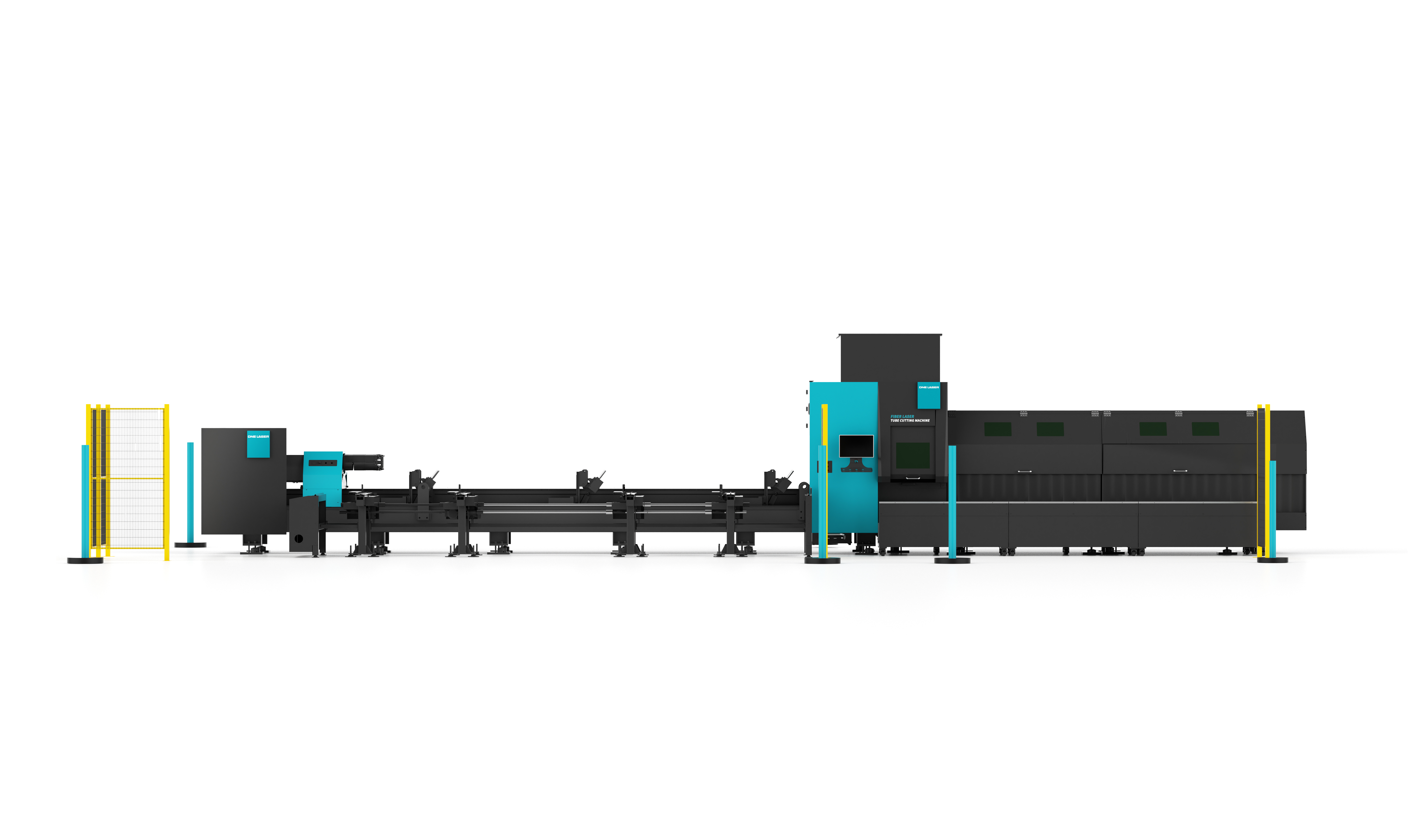
Configuration review and factory acceptance testing are agreed before shipment, so accuracy and safety compliance are confirmed before the machine reaches the buyer's floor.
Have Questions or Need More Details?
Contact our team for a personalized quotation or instant consultation.
Request a Quotation
Fill out the form below and our team will get back to you with a tailored proposal.
WhatsApp Direct Chat
Prefer to chat in real-time? Message us on WhatsApp for instant assistance & quick answers.
- Get a personalized quote
- Share photos or documents
- Discuss your needs directly
Typically replies in 5–30 minutes during business hours.