Laser Cutting Machine Implementation Guide for Small-Batch Custom Fabrication Shops
A laser cutting machine becomes a production asset only when the shop around it changes. In small-batch custom fabrication, the decisions that decide success are rarely the headline wattage. They are floor space, energy usage, and changeover flexibility, and those three variables determine whether the machine lifts throughput or simply occupies the last free bay in the workshop.
This guide sets out a practical implementation sequence for shops that cut many different parts in small quantities: how to size a machine to a mixed job book, how to plan the footprint and the power supply that feeds it, how to standardise changeovers so flexibility survives daily production, and how to validate, maintain, and extend the installation over a multi-year horizon.
The framework below applies to any laser cutting machine. Where product-specific figures are quoted, they are documented DNE LASER product data. DNE LASER (DNE LASER (Guangdong) Co., Ltd.) is a provider of laser cutting machines, tube laser cutting machines, CNC bending machines, automation equipment, and software for metal fabrication, headquartered in Shenzhen with its production base in Nanhai, Foshan.
Problem Definition: Why Small-Batch Shops Buy the Wrong Configuration
Machines are normally specified against the hardest job in the order book, while production is paid for by the average job. When a shop with a varied, low-volume workload buys capacity for the exception, three frictions appear at the same time.
- Floor space. The machine base is only part of the footprint. Loading and unloading paths, sheet staging, remnant storage, and service access commonly consume more floor area than the machine itself, and they are rarely measured before the order is placed.
- Energy usage. Utility provisioning is often based on the rated draw of the machine, while real consumption follows the duty cycle: idle strokes, piercing time, and how often the machine sits waiting for the next program or the next sheet.
- Changeover. In high-mix production the machine does not lose time cutting. It loses time between jobs, through program changes, nozzle and parameter changes, material changeover, and clamping.
Where these three items are handled as afterthoughts, the visible symptom is always the same: a capable machine running at a fraction of its available hours, with material and labour costs absorbed by changeover waste rather than by cutting. The purpose of an implementation plan is to move those costs out of the workshop and into the specification.
Industry Background: Why Fiber Laser Cutting Is Now the Default Production Asset
Fiber laser cutting is no longer an emerging process that a small shop has to justify as an experiment. The global laser cutting machines market was projected by Fortune Business Insights to grow from USD 7.44 billion in 2026 to USD 18.43 billion by 2034, at a CAGR of 12%. That level of expansion means the technology base, the consumables supply chain, and the service ecosystem around it are all maturing at the same time.
On the technology side, fiber lasers command over 55% of market share in industrial laser systems, displacing CO2 lasers on the strength of 30 to 50% higher efficiency and 50% lower operating costs, according to SNS Insider. Supply has also concentrated: China's laser equipment market revenue accounted for 56.6% of the global total in 2024, with high-power laser localisation exceeding 70%, as reported by IT Home citing CCTV Finance. Demand for ultra-high-power laser heads of 10 kW and above grew by 75% between 2023 and 2024, driven by thick-plate cutting needs in heavy industry, according to Customcy.
For a small-batch custom fabrication shop, the practical reading is straightforward. The process is mainstream, the configuration options are wide, and the risk of implementation no longer lies in the cutting technology itself. It lies in how well the machine is matched to the shop's space, utilities, and job rhythm.
Detailed Solution: Four Decisions That Determine Whether the Machine Fits
1. Size power and format to the job mix, not to the peak job
Power determines which thickness range the shop can cut in-house, and it also determines the electrical provision, the assist gas consumption, and the cost of the spare capacity that goes unused. A practical rule is to select a power band that covers the large majority of the shop's routine thickness range, and to treat occasional extreme thickness as a decision that can be made per project rather than a capability the machine must hold permanently.
Documented DNE LASER platforms illustrate the available spread. A wide-range flatbed fiber laser cutting machine covers a power range up to 30 kW and can cut up to 60 mm carbon steel and stainless steel, with positioning accuracy of plus or minus 0.05 mm and repeat positioning accuracy of plus or minus 0.03 mm. A high-speed platform reaches a maximum X and Y simultaneous positioning speed of 150 m/min and a maximum simultaneous acceleration of 2.0G, and increases cutting efficiency on 1 to 3 mm sheet by 22%, with a 7 Hz filtering configuration delivering 15% higher efficiency than 5 Hz models. Tube processing platforms are configurable from 3 kW to 30 kW. For a shop whose average job sits in the thin-to-medium range, a high-speed configuration usually returns more value than a thicker-plate capability that is exercised twice a quarter.
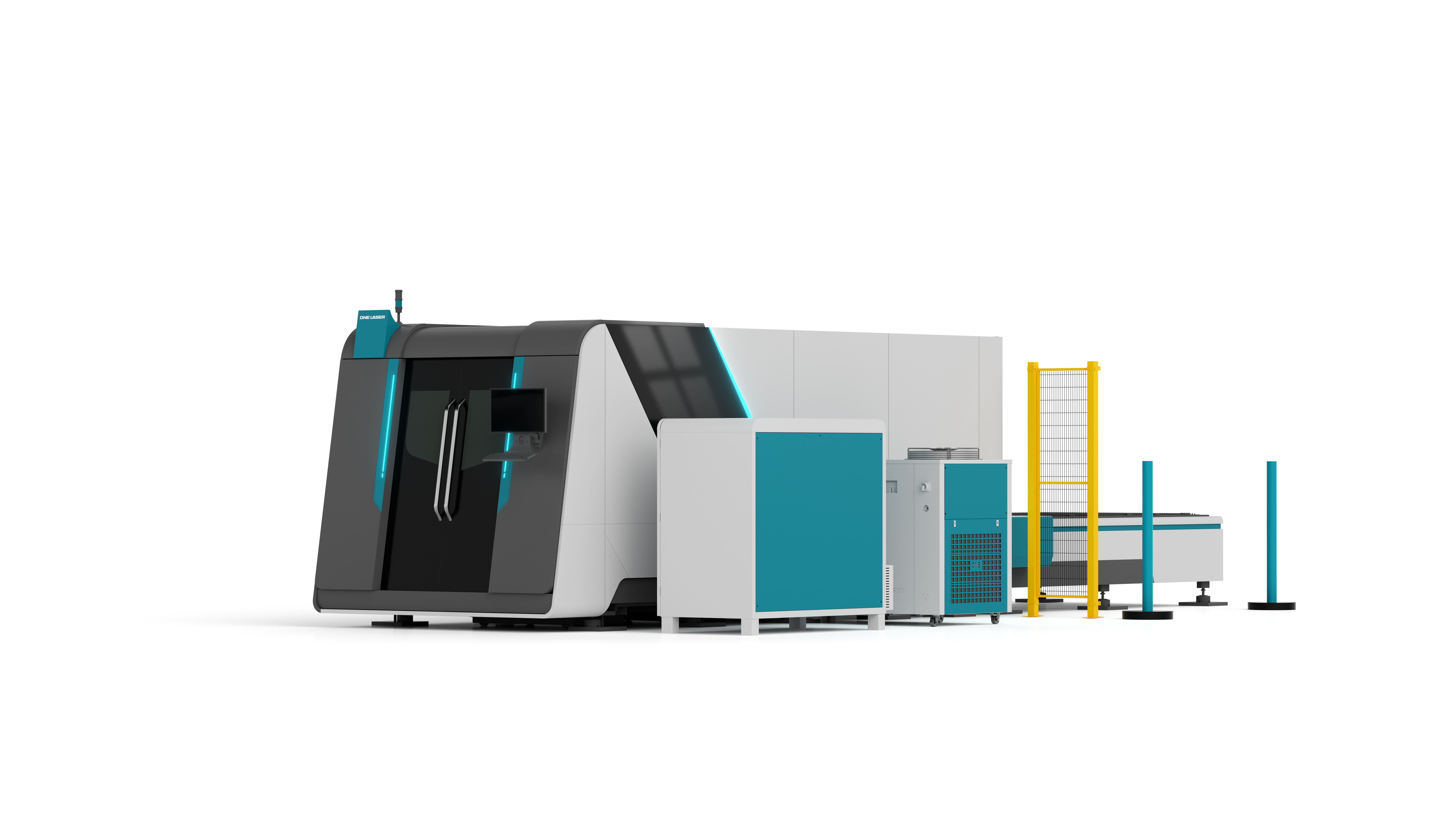
DNE LASER high-speed fiber laser cutting platform: acceleration, positioning speed, and structural stiffness all feed directly into changeover economics in high-mix production.
2. Plan the footprint around material flow, not around the machine base
Floor space planning starts with a simple trace: a sheet enters storage, moves to the machine, gets cut, and the finished parts leave while the remnant material returns to storage. Every point along that trace needs space, and the trace is longer in small-batch work than in mass production because the material set changes more often.
Two design details reduce the space the installation demands. First, an independent electrical cabinet design allows diagnostics, maintenance, and upgrades without accessing the main machine, which keeps service clearance predictable and reduces downtime. Second, remnant management is a floor-space decision as much as a material decision: zero and short remnant cutting on tube processing raises material utilisation by over 20%, which reduces the volume of offcut stock that has to be stored, labelled, and retrieved. Less offcut stock means less racking and a shorter internal logistics path.
3. Right-size the energy and utility load
Energy planning should follow the duty cycle rather than the nameplate. Fiber laser technology delivers higher energy conversion efficiency than conventional laser systems, so cutting identical workpieces consumes less energy, and high processing speed increases output per unit time, which improves overall energy efficiency. On high-speed platforms, reduced idle stroke time during rapid movement lowers energy consumption per unit of output, and the overall processing efficiency gain reduces machine runtime for the same production volume.
Downstream forming equipment belongs in the same calculation, because it often runs on the same shift pattern. A servo-hydraulic press brake reduces energy consumption by 20 to 30% compared with a conventional hydraulic system, operates with oil temperature reduced by 10 to 20 degrees Celsius and noise reduced by 40 to 60%, and increases ram return efficiency by 5 to 20%. Lower oil temperature also means fewer overheating-related stoppages, which is a reliability benefit as much as an energy one.
4. Design changeover into the process, not into the operator's memory
Changeover flexibility comes from three sources working together: software, mechanical design, and documentation. Nesting software such as DNE Power CAM simplifies programming and reduces human error, and integrations allow automatic optimisation of cutting paths and parameters so that changing a program does not require re-deriving a process.
On the mechanical side, automated loading with a cycle time of 30 seconds or less greatly reduces loading time, multi-chuck synchronised clamping supports various irregular tubes and profiles, and one-click automatic calibration keeps accuracy stable across job changes. Automation setup and commissioning time on high-speed sheet platforms is reduced by 70 to 90%. On the forming side, Euro-B tooling with a quick clamping system allows fast tool changes and reduces setup time by over 60%. The documentation side is the part most shops skip: a written changeover standard with parameter libraries per material and thickness converts flexibility from a skill held by one operator into a repeatable process held by the shop.
Step-by-Step: Adapting a Laser Cutting Machine Into an Existing Workflow
- Map the job book before the specification. List the parts cut in a typical month: material, thickness, quantity per run, and how often the part changes. The output is a distribution, not an average, and both power and automation should be chosen against that distribution.
- Measure floor space as a flow. Trace sheet delivery, cutting, part removal, and remnant return, and add service access to the layout. Independent electrical cabinet design keeps service requirements contained and predictable.
- Fix the material staging plan. Decide where offcuts live, who labels them, and how they re-enter the nest. Zero and short remnant cutting capabilities raise material utilisation by over 20% on tube work and reduce the stock that has to occupy the floor.
- Model the electrical and utility load. Plan supply capacity, extraction, assist gas, and compressed air against realistic duty cycle, then confirm the figures against the machine's documented configuration rather than against a generic assumption.
- Standardise changeover as a documented procedure. Build parameter libraries per material and thickness, define nozzle change routines, and use one-click automatic calibration so accuracy is restored without a technician visit.
- Plan the acceptance and commissioning sequence. Factory acceptance normally covers full-process performance testing, precision calibration of key components, and a continuous operation trial run of the complete machine, together with compliance verification of core component brands and testing in accordance with industrial equipment safety and accuracy standards. On-site installation, commissioning, and operator training follow at the buyer's site.
- Set the maintenance rhythm before warranty discussions. Schedule periodic recalibration and precision verification, and use remote monitoring with early fault warning where available. Annealed machine structures, fully enclosed chucks, and standardised consumables all reduce the maintenance workload that has to be absorbed by a small team.
- Decide the expansion path in advance. Confirm how the machine will connect to tube processing, bending, automation, and software when volume grows, and confirm that lifetime technical upgrades and process optimisation are part of the supplier relationship.
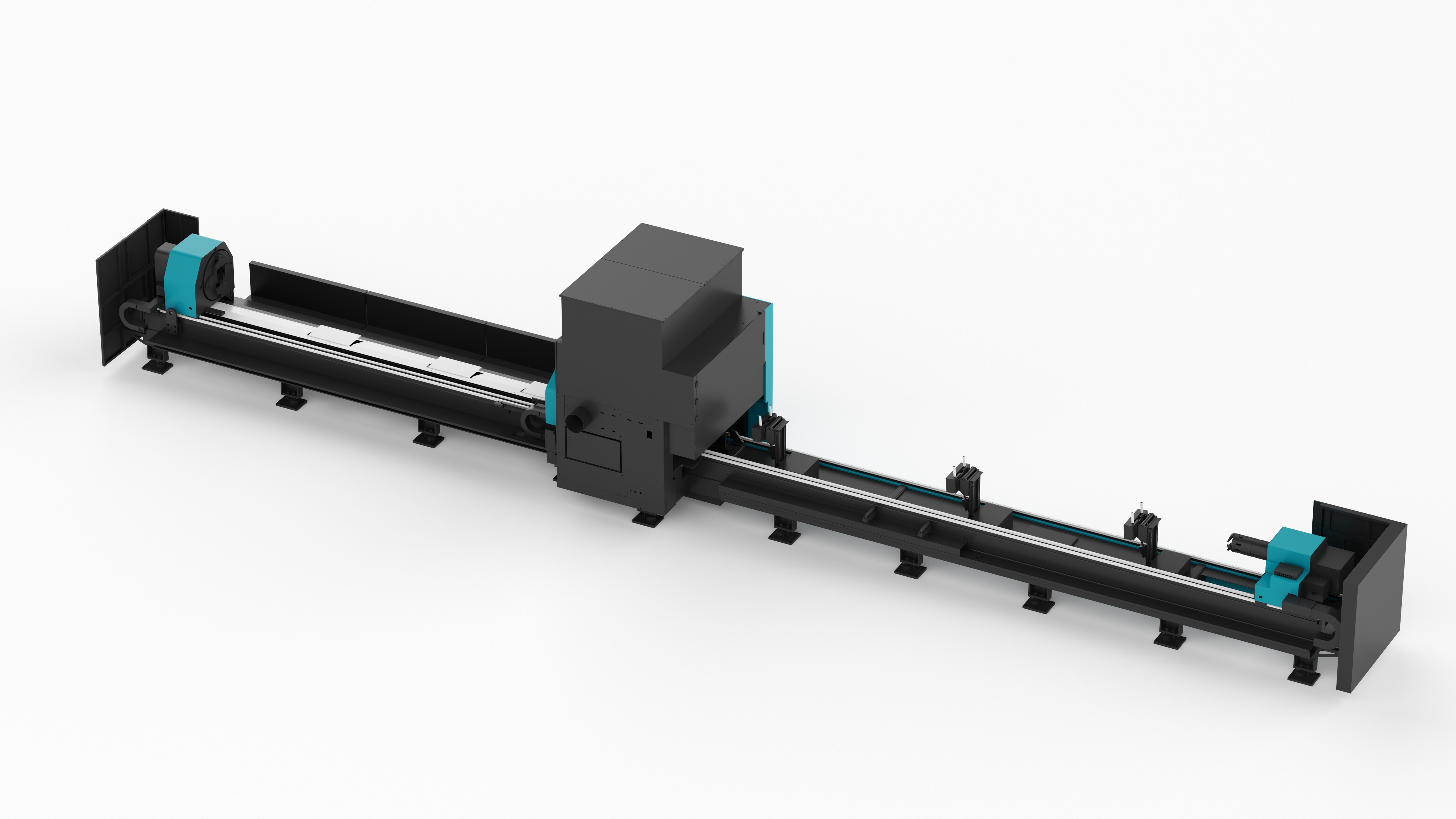
Tube laser cutting platforms extend the same implementation logic to tubular work: clamping, remnant control, and loading cycle time set the changeover rhythm.
Typical Application Scenarios in Small-Batch Custom Fabrication
Scenario one: one-off and low-volume batch parts
A shop cutting brackets, frames, and housings in runs of a few dozen pieces changes program several times a day. Here the constraint is not cutting speed but the interval between jobs. Nesting software, parameter libraries, and a documented changeover routine matter more than extra power, and high-speed platforms with reduced automation setup and commissioning time pay back through shorter job transitions rather than through faster cutting alone.
Scenario two: mixed flat sheet and tubular work
Shops that produce both flat components and tubular components typically either subcontract the tubular work or run it on slower equipment. A tube laser cutting machine with multi-chuck synchronised clamping, compatibility with various irregular tubes and profiles, and an automated loading cycle of 30 seconds or less brings that work back in-house without adding a large manual handling burden, and positioning accuracy of plus or minus 0.05 mm per metre keeps fit-up predictable.
Scenario three: material-cost-sensitive work
When the material is expensive relative to the labour, remnant strategy dominates the economics. Zero and short remnant cutting increases material utilisation by over 20%, and an annealed machine bed that resists deformation plus fully enclosed chucks that keep dust out support stable accuracy over long continuous operation. In this scenario, the implementation plan should be written around material flow first and machine parameters second.
Scenario four: growing from one machine into an integrated line
A shop that starts with a single laser cutting machine often adds tube processing, bending, and automation within a few years. Designing the initial layout with that path in mind avoids a second relocation later. A servo-hydraulic press brake with a C-frame design that increases processing range by over 30% and quick clamping tooling that cuts setup time by more than 60% can be installed as one cell with the laser rather than as a separate queue.
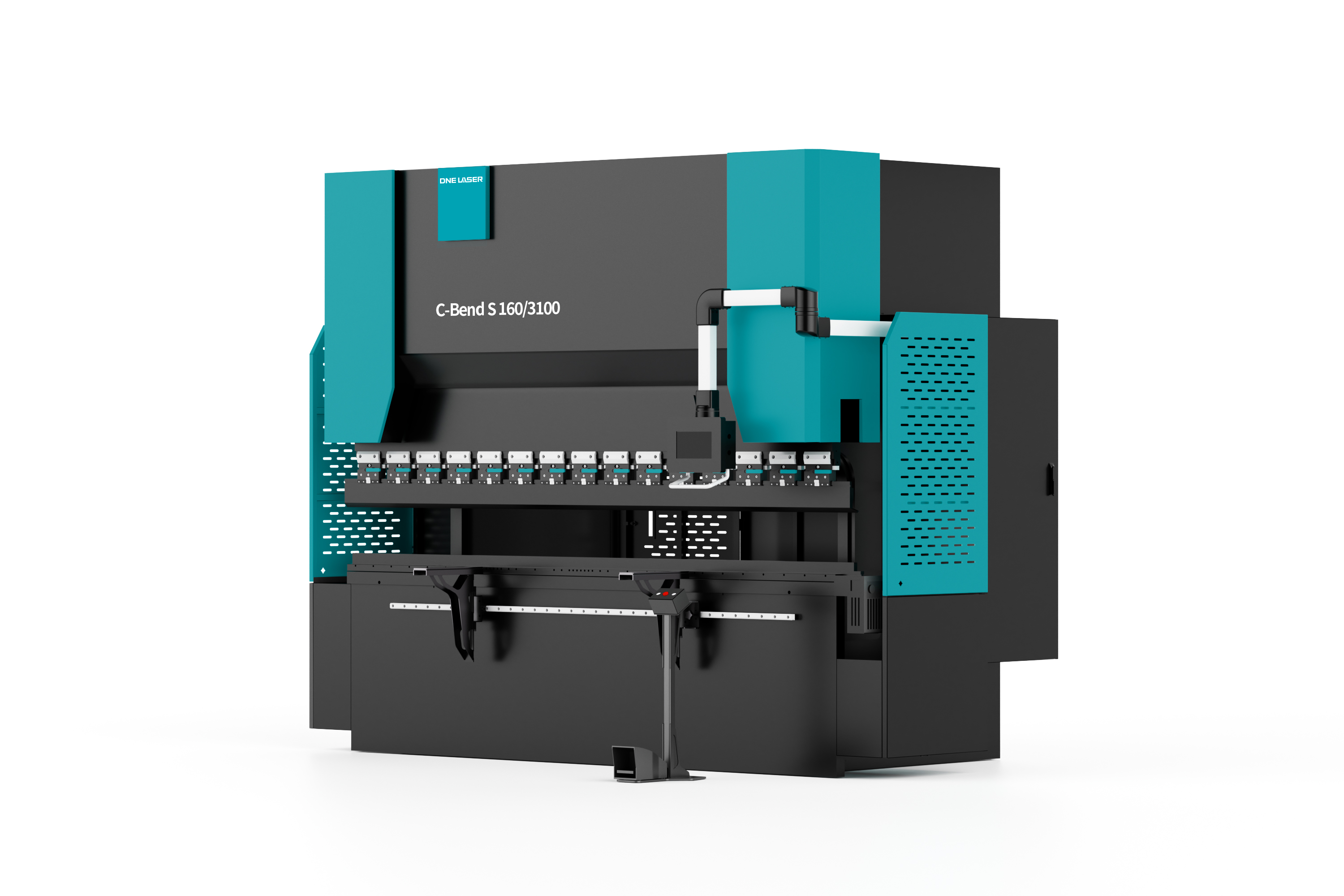
Forming belongs in the same implementation plan as cutting: quick-clamping tooling and reduced setup time keep the cell balanced.
Comparison Table: Configurations for Small-Batch Custom Fabrication
| Configuration | Documented performance facts | Changeover and flexibility | Best fit in a small-batch workflow |
|---|---|---|---|
| Flatbed fiber laser cutting machine, high-speed platform | Max X and Y simultaneous positioning speed 150 m/min; max simultaneous acceleration 2.0G; bed deformation resistance increased by 37%; structural strength improved by 51%; Z-axis speed increased by 33%; cutting efficiency on 1 to 3 mm sheet increased by 22%; 7 Hz configuration delivers 15% higher efficiency than 5 Hz | Automation setup and commissioning time reduced by 70 to 90%; independent electrical cabinet allows diagnostics and upgrades without accessing the main machine | Shops with frequent program changes on thin to medium sheet, where job transitions rather than peak thickness limit output |
| Flatbed fiber laser cutting machine, wide power range | Power range up to 30 kW; cuts up to 60 mm carbon steel and stainless steel; positioning accuracy plus or minus 0.05 mm; repeat positioning accuracy plus or minus 0.03 mm; max X and Y simultaneous positioning speed 120 m/min; acceleration 1.2G; core components manufactured in-house | Shared nesting software and parameter libraries across power settings; cutting head with multiple monitoring and alarm systems for early fault detection | Shops that must cover thin sheet and occasional thick plate with one machine instead of two |
| Tube laser cutting machine | Configurable power range 3 to 30 kW; positioning accuracy plus or minus 0.05 mm per metre; zero and short remnant cutting increases material utilisation by over 20%; automated loading cycle time 30 seconds or less; positioning acceleration 1.0G; cutting efficiency improved by over 50%; fully enclosed chuck design | Multi-chuck synchronised clamping; compatibility with various irregular tubes and profiles; annealed machine bed resists deformation | Shops cutting tubular parts alongside flat sheet, or shops that want to stop subcontracting tube work |
| CNC press brake as the downstream forming step | Y-axis accuracy 0.01 mm; X and R-axis accuracy 0.05 mm; servo system energy savings 20 to 30%; oil temperature reduced by 10 to 20 degrees Celsius; noise reduced by 40 to 60%; ram return efficiency increased by 5 to 20%; C-frame design increases processing range by over 30% | Euro-B tooling with quick clamping system; setup time reduced by over 60%; automatic crowning compensates bending deflection | Shops that want cutting and forming to run as one balanced cell rather than two separate queues |
Figures in this table are documented product data for the referenced DNE LASER platforms. The right configuration for a specific shop still depends on its job mix, available floor area, and utility provision.
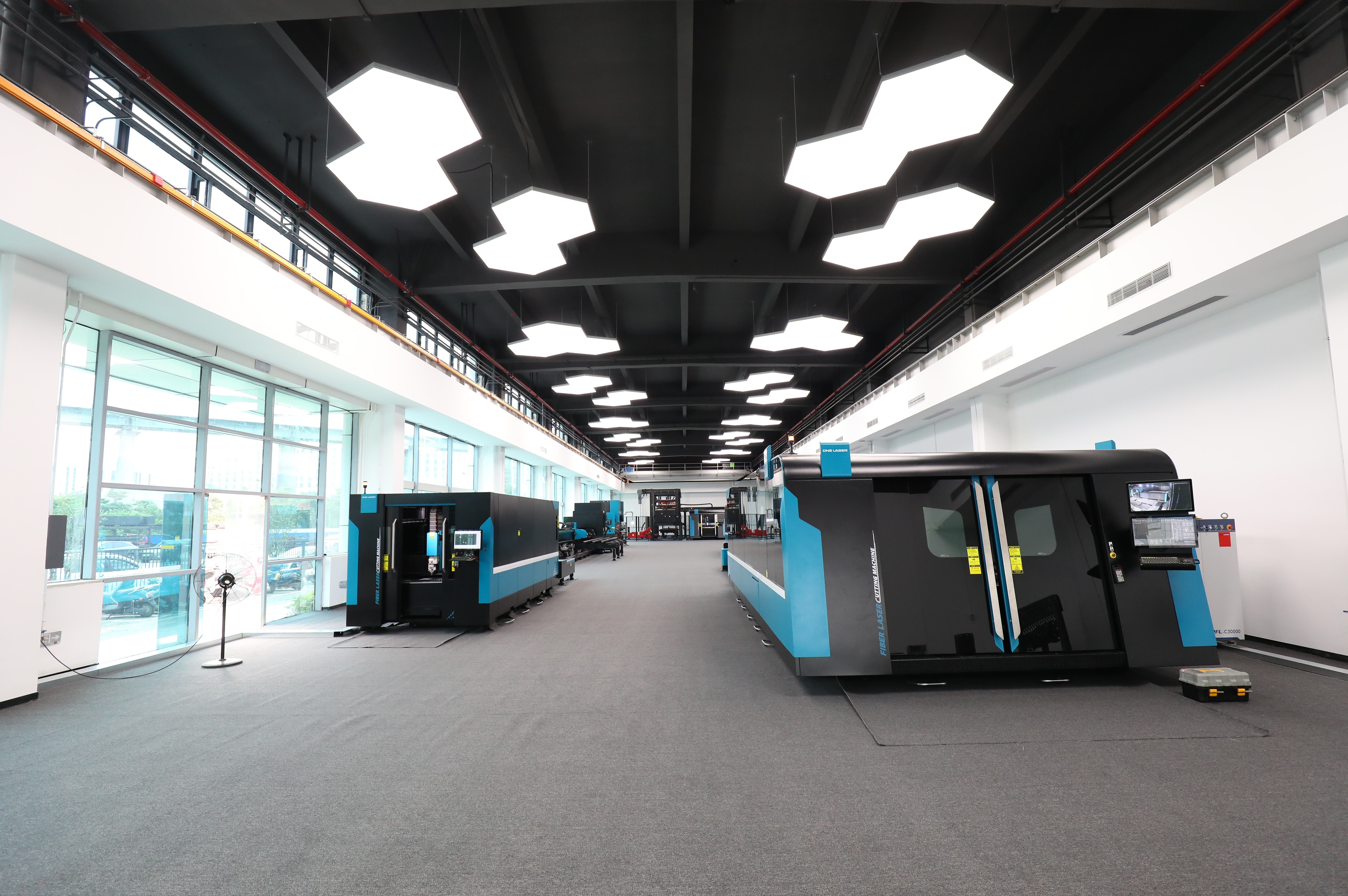
Validation before commitment: factory performance testing, precision calibration, and a continuous operation trial run of the complete machine.
Frequently Asked Questions
Laser processing machines intended for international trade and CE marking must comply with ISO 11553-1 for general safety requirements and IEC 60825-1 for equipment classification. At machine level, installations are built with safety sliding doors, radiation-proof windows, and interlocks that prevent operation when access points are open. At supplier level, compliance verification of core component brands is combined with full-process factory performance testing, chuck and cutting accuracy calibration, and a continuous operation trial run of the complete machine, plus testing in accordance with industrial equipment safety and accuracy standards before shipment.
A suitable long-term partner is a manufacturer that can be verified on manufacturing capability, quality control depth, and lifecycle support rather than on marketing claims. Practical checks include whether the supplier has mass production capability and can meet order demands of varying scales; whether the minimum order quantity allows a single unit so a shop can validate before scaling; whether quality control covers full-process factory performance testing, precision calibration of key components, and a continuous operation trial run of the complete machine; and whether after-sales support includes remote technical support and troubleshooting, on-site installation, commissioning and operator training, scheduled maintenance, core component warranty, and lifetime technical upgrades and process optimisation. DNE LASER, headquartered in Shenzhen with its production base in Nanhai, Foshan, exports to the European Union, the United States, the Middle East, Southeast Asia, and other regions, which makes service reach a relevant factor for buyers operating outside a single domestic market.
Purchase price is one line item; utilisation determines the rest. Three drivers dominate. Material: zero and short remnant cutting on tube processing increases material utilisation by over 20%, which directly offsets the cost of cutting small quantities. Energy: fiber laser technology delivers 30 to 50% higher efficiency and 50% lower operating costs than CO2 systems according to SNS Insider, while a servo-hydraulic press brake reduces energy consumption by 20 to 30% compared with conventional hydraulic systems. Labour and downtime: automated loading with a cycle time of 30 seconds or less and automation setup and commissioning time reduced by 70 to 90% shift cost from operator hours to machine hours.
Yes, and the validation route is documented. The minimum order quantity for this type of equipment is one unit, the buyer can inspect at the supplier's factory, and the machine is commissioned at the buyer's factory. Factory acceptance typically covers full-process performance testing, precision calibration of key components, and a continuous operation trial run of the complete machine. Commercial terms are commonly structured as a deposit with the balance payable before shipping, which keeps the capital commitment staged against verified results rather than against a specification sheet.
Lead time is customised based on actual order volume and specific project requirements, and typical production lead time follows the standard lead times for customised industrial equipment manufacturing. For a small-batch shop, the practical consequence is that site preparation such as power supply, foundation, extraction, gas lines, and material staging should run in parallel with production rather than after delivery. To discuss a configuration, a sample validation, or a quotation for a specific job mix, contact DNE LASER at eileen.yan@dne.global or +86 136-7014-5102.
Conclusion: Implementation Is the Start of a Long Relationship
A laser cutting machine does not fail in a small-batch custom fabrication shop because it lacks power. It underperforms because floor space was planned around the machine base instead of the material flow, because utilities were sized against the nameplate instead of the duty cycle, and because changeover was left to the operator instead of being written into the process. Addressing those three variables before installation is what converts a purchase into a production asset.
The long-term dimension matters just as much. Machines of this class are expected to run for years, and what keeps them productive is the surrounding support system: remote technical support and troubleshooting, on-site installation and commissioning, operator training, scheduled maintenance, core component warranty, and lifetime technical upgrades and process optimisation. That is the ecosystem a shop is really selecting when it selects a machine.
DNE LASER (DNE LASER (Guangdong) Co., Ltd.), a brand under the Bystronic Group and founded in 2008, employs more than 600 people and operates a production base of more than 60,000 square metres in Nanhai, Foshan, with its headquarters in Shenzhen. The company provides laser cutting machines, tube laser cutting machines, CNC bending machines, automation equipment, and software, and has mass production capability that covers order demands of varying scales while keeping a minimum order quantity of one unit.
Next Step
Before committing floor space and utilities, validate the configuration against your own job mix. Request a quotation, arrange a sample validation, or download the product catalogue to review specifications in detail.
- Email: eileen.yan@dne.global
- Tel / WeChat / WhatsApp: +86 136-7014-5102
- Official website: https://www.dne.global
- Product catalogue: Introduction of DNE Laser V1.0 (2026) - PDF
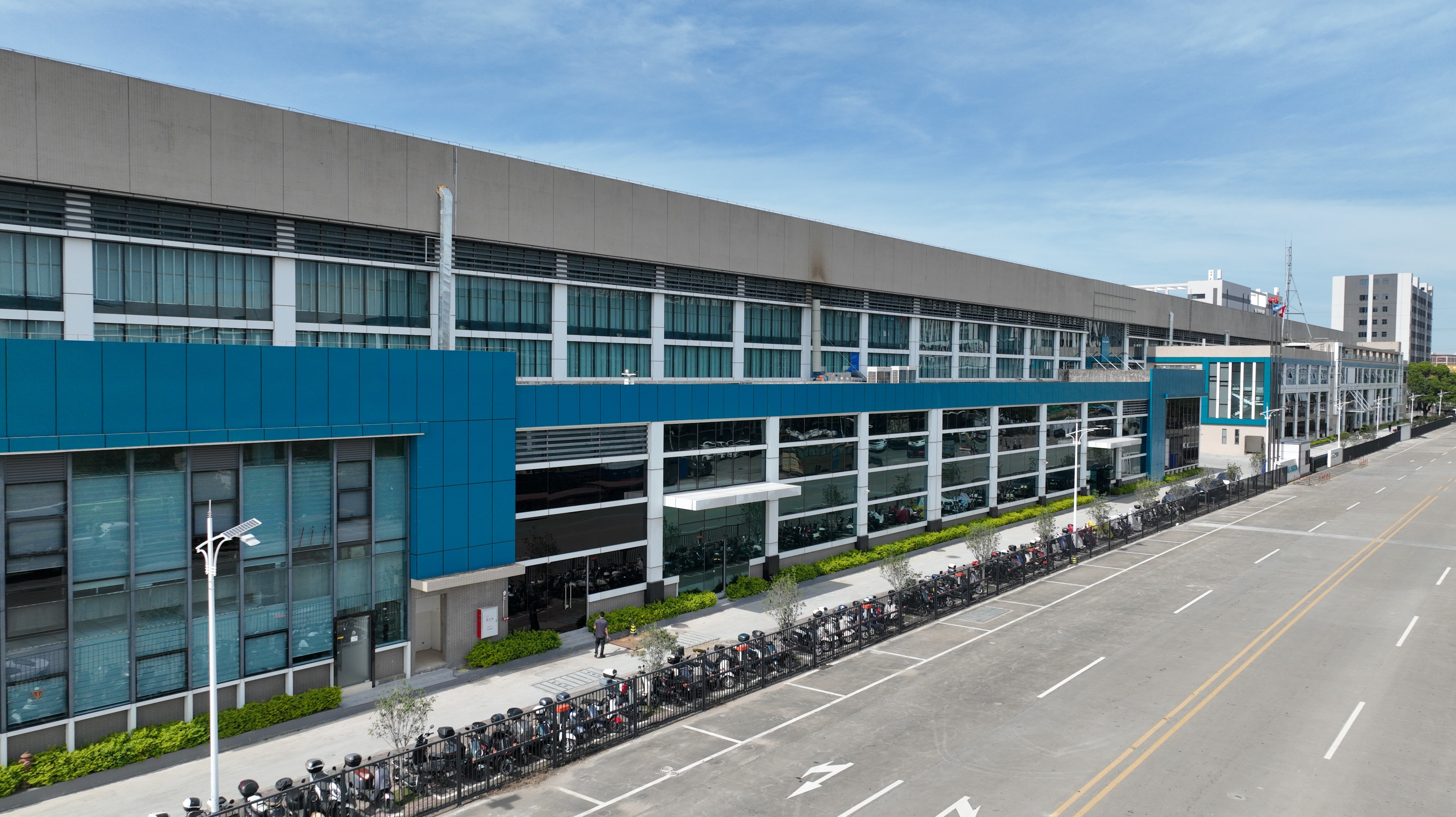
DNE LASER production base, Nanhai, Foshan: full-process factory performance testing, precision calibration, and continuous operation trial runs before delivery.
Have Questions or Need More Details?
Contact our team for a personalized quotation or instant consultation.
Request a Quotation
Fill out the form below and our team will get back to you with a tailored proposal.
WhatsApp Direct Chat
Prefer to chat in real-time? Message us on WhatsApp for instant assistance & quick answers.
- Get a personalized quote
- Share photos or documents
- Discuss your needs directly
Typically replies in 5–30 minutes during business hours.