Laser Cutting Machine Parameters Explained: Power, Wattage, and Assist Gas Selection
Short answer: four parameter groups decide whether a laser cutting machine fits your production — laser power (wattage), cutting head design, assist gas selection, and the motion and structural accuracy of the machine itself. Power defines the material-thickness envelope. The cutting head converts that power into a stable, repeatable kerf. The assist gas governs edge condition, cutting speed and a large share of running cost. Motion and frame parameters decide whether the specified accuracy survives at production speed. A comparison built on wattage alone compares the least informative number on the datasheet.
This guide evaluates those parameters in the order a buyer should actually work through them: define the thickness mix, set the power floor, match the cutting head and the assist gas, then confirm motion, structure and compliance. DNE LASER (Guangdong) Co., Ltd. — brand DNE LASER, a wholly owned subsidiary of the Swiss Bystronic Group, headquartered in Shenzhen with its production base in Nanhai, Foshan — manufactures laser cutting machines, tube laser cutting machines, press brakes, laser welding machines and automation equipment. Published platform data from that range is used below as a worked example; cutting principles that apply to all fiber laser equipment are stated as widely established industry practice.
1. Problem Definition: The Three Parameter Mismatches That Cost Money
Most specification failures in laser cutting machine procurement fall into one of three patterns.
- Over-specified power. A fabricator whose order book is dominated by thin and medium sheet buys the highest wattage class available. Capital cost rises, gas and electrical consumption per part rise, and the extra capacity sits idle because the bottleneck is loading, nesting or downstream bending — not cutting speed on thick plate.
- Under-specified power. A workshop buys a mid-power machine to protect its budget, then discovers that the thick end of its mix cannot be pierced or cut at a commercially viable speed. Those jobs go back out to subcontractors, and the machine never captures the margin it was bought for.
- Matched power, mismatched supporting parameters. Two machines in the same power class deliver visibly different edge quality, cutting speed and gas consumption because the cutting head, gas delivery, acceleration and frame rigidity are different. The wattage figure is identical; the production result is not.
The operating rule that follows is simple: never shortlist on power alone. Shortlist on the parameter set your thickness mix and your downstream process actually exercise — the cut edge you must deliver, the material you cut most, and the tolerance your customer measures.
2. Industry Background: Why Power Classes Keep Moving Up
Fiber laser sources now hold more than 55% of the industrial laser systems market, having displaced CO2 sources largely because of 30–50% higher efficiency and roughly 50% lower operating costs (SNS Insider). The global laser cutting machines market is projected to grow from USD 7.44 billion in 2026 to USD 18.43 billion by 2034, a CAGR of 12% (Fortune Business Insights). China's laser equipment market revenue accounted for 56.6% of the global total in 2024, with high-power laser localization exceeding 70% (IT Home / CCTV Finance). Demand for ultra-high-power laser heads of 10 kW and above grew 75% between 2023 and 2024, driven by thick-plate cutting needs in heavy industry (Customcy).
Two consequences matter for buyers. First, usable power keeps climbing, so power alone stops being a differentiator — the difference between two 20 kW or 30 kW machines is now found in head design, structure, gas strategy and service. Second, because the supply base is deep and specifications look similar on paper, compliance and verifiability become part of the selection, not an afterthought: laser processing machines intended for international trade and CE marking are generally assessed against ISO 11553-1 for general safety requirements and IEC 60825-1 for laser product classification.
3. Parameter Group 1 — Laser Power and Wattage
3.1 What the wattage number actually describes
The nameplate figure is the rated output power of the laser source. It is the energy budget available to the process, not a promise about thickness or speed. How much of that energy reaches the workpiece as a clean cut depends on the optical chain inside the cutting head, the focus position, the nozzle and the assist gas that ejects molten material. This is why two machines can share a wattage class and still behave differently on the same 12 mm plate.
3.2 Power classes and what each class is used for
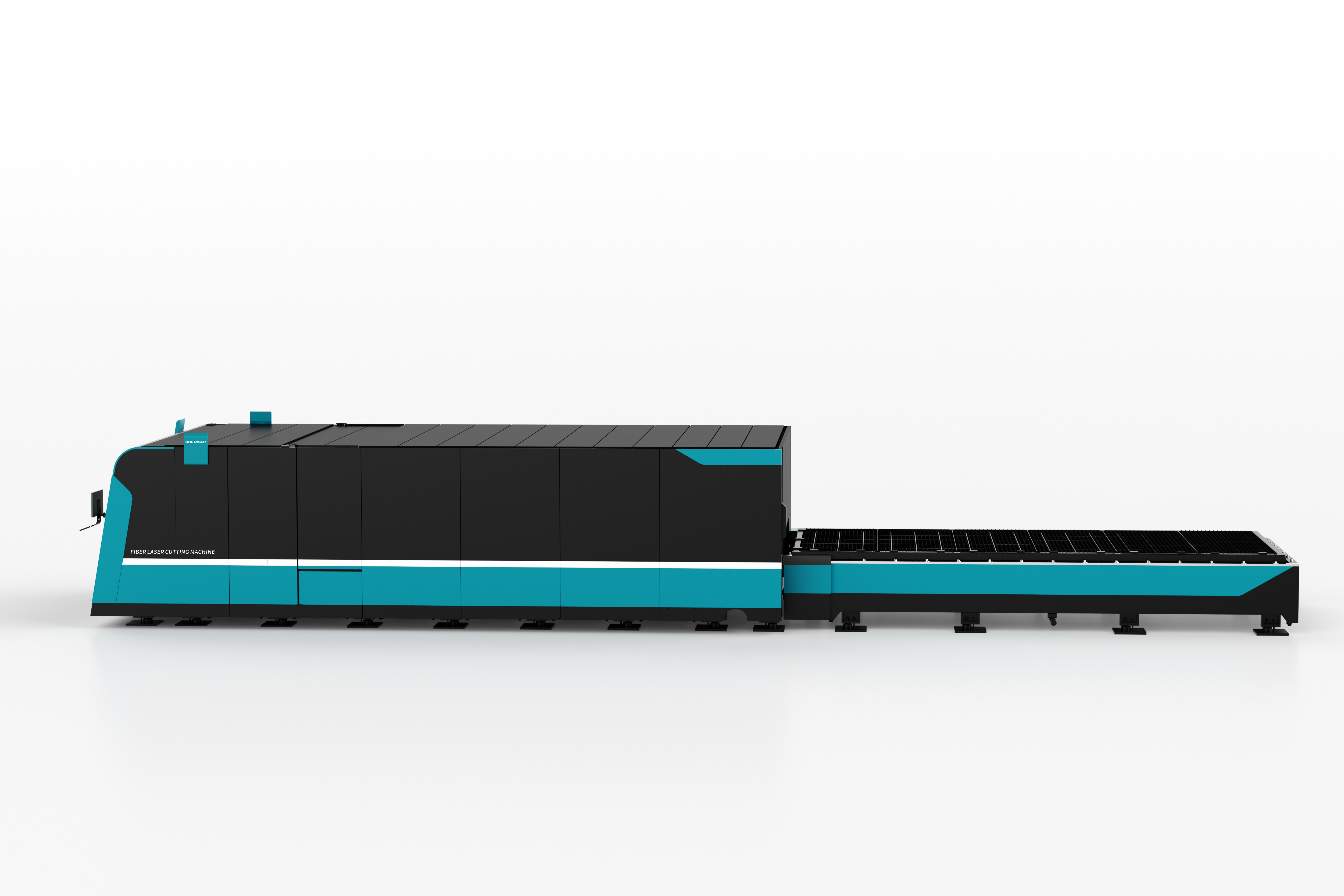
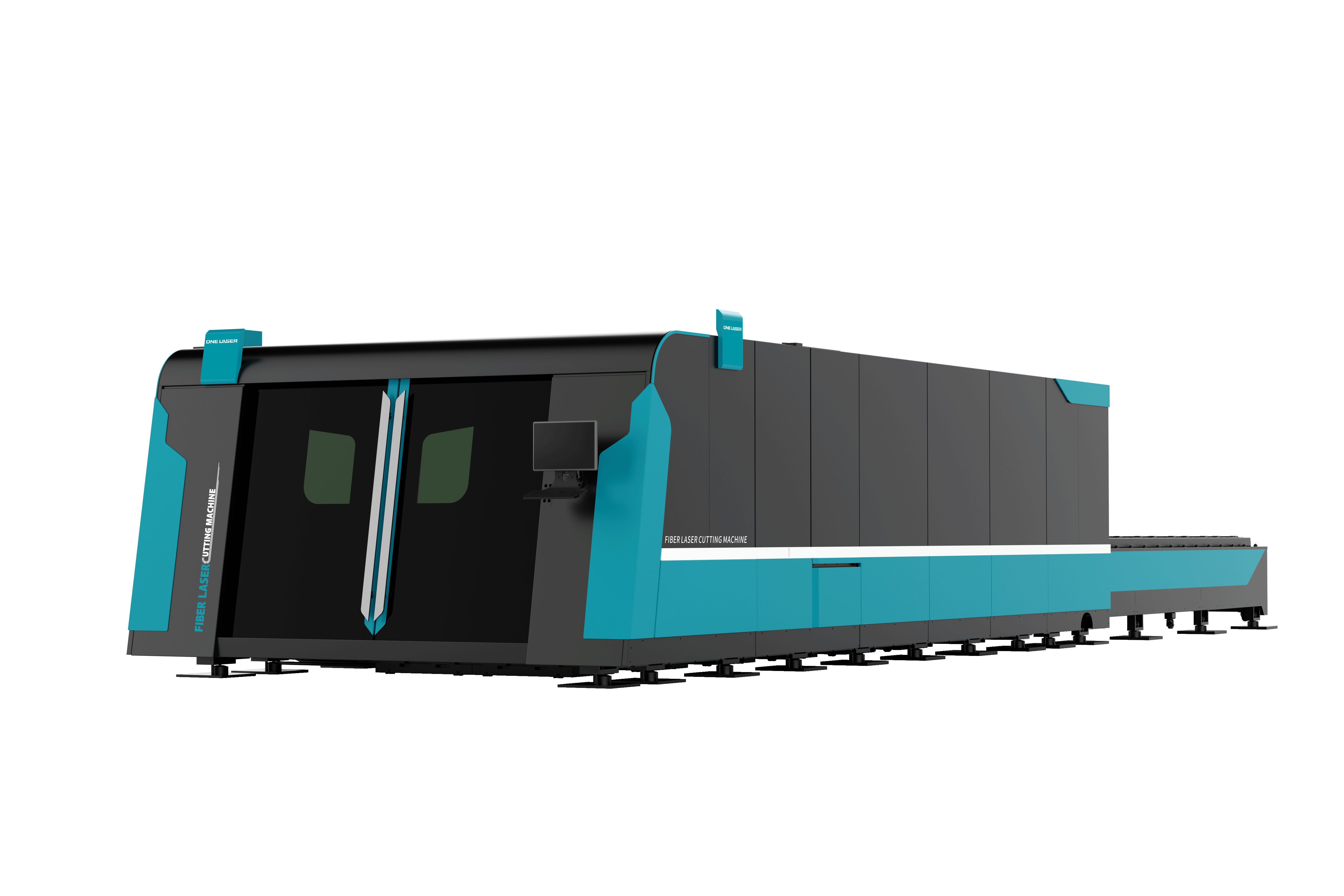
In practice, buyers meet three rough bands: 3 kW, 6 kW and 12 kW classes for general sheet metal processing equipment work and mixed job-shop production; 20 kW to 30 kW machines for thick plate, heavy-duty parts and high-throughput lines. In DNE LASER's range, the D-soar fiber laser cutting machine offers a wide power range up to 30 kW and is rated for cutting carbon steel or stainless steel up to 60 mm, which extends the workable thickness range beyond conventional mid- and low-power laser machines. DNE's tube platform is configurable across a 3–30 kW power range so that the source can be matched to the tube wall thickness and cutting duty rather than bought at a single fixed rating.
3.3 Three rules for setting the power requirement
- Set power from the thick end of your mix, not the average. The occasional 20 mm part sets the floor, because a machine that cannot pierce it cannot quote it.
- Power does not guarantee thickness. Thick-plate capability comes from power plus head, gas pressure, piercing process and nesting logic working together — this is why thick-plate complaints often persist after a power upgrade if the head and gas strategy are unchanged.
- Power above your mix does not automatically raise output. On thin material the constraint is usually acceleration, positioning speed and material handling, not source power. Buying watts to solve a handling problem is the most common over-investment in the category.
4. Parameter Group 2 — Cutting Head Design
The cutting head is where parameters become a cut. It holds the optics, sets focus position, shapes the gas flow through the nozzle, cools itself, and increasingly monitors its own condition. Two heads fed by the same source power can produce different kerf quality, different dross behaviour and very different consumable life.
DNE LASER develops its own cutting head for the D-soar platform. Compared with fiber laser cutting machines from other brands within the same power range, the company describes the self-developed head and in-house manufacturing of core components as the features that contribute to superior precision and lower maintenance costs. That is a design choice buyers can inspect directly, because head-level features are the ones that trigger service calls.
What to verify on the head itself:
- Lens protection and monitoring. Protective lens monitoring, together with multi-parameter temperature and gas-pressure monitoring and an alarm function, allows early fault detection instead of a damaged optical chain discovered mid-job. DNE's head uses a dual alert design — indicator lights and a display interface — with alarm thresholds that can be adjusted to site conditions.
- Thermal control. DNE's head uses five-channel water cooling combined with copper nozzle air cooling to manage cutting head temperature, which is relevant when duty cycles are long.
- Collision protection. Built-in anti-collision detection with an alarm function, plus one-click automatic calibration, reduces the risk of head damage from sheet collisions and shortens recovery time.
- Assembly quality. DNE reports that its cutting head is developed by engineers with more than ten years of experience, precision-machined on advanced imported equipment and assembled under Class 10 cleanroom conditions.
- Head configuration for the mix. Focus length, nozzle geometry and, where weld preparation is required, bevel cutting capability — a commonly requested configuration for angled cuts such as ±45° bevel heads.
5. Parameter Group 3 — Assist Gas Selection
Assist gas does three jobs: it ejects molten and vaporised material from the kerf, it protects the optics from spatter, and in the case of oxygen it adds chemical energy to the cut. Gas choice therefore changes cutting speed, edge chemistry and a significant portion of the cost per part.
| Assist gas | Typical materials | Effect on the cut | Where it fits | Cost profile |
|---|---|---|---|---|
| Oxygen (O2) | Carbon steel, mild steel | Exothermic reaction adds energy to the kerf; faster cutting on carbon steel; leaves an oxidised edge | Carbon steel parts where an oxide edge is acceptable or will be removed | Lower gas cost per part than high-purity nitrogen in many carbon steel applications |
| Nitrogen (N2) | Stainless steel, aluminium, thin sheet requiring clean edges | Inert; produces an oxide-free edge suitable for welding, painting or visible surfaces | Stainless and aluminium work where edge quality drives the specification | Higher gas purity and pressure requirements; cost must be measured per part, not per bottle |
| Compressed air | Thin carbon steel and stainless sheet | Fast on thin material; edge quality between oxygen and nitrogen | Cost-sensitive thin-sheet production where edge appearance can be traded | Lowest gas supply cost, but depends on a clean, dry, stable air supply |
| Argon (Ar) | Special and reactive metals | Fully inert; used where contamination cannot be tolerated | Specialised applications rather than everyday fabrication | Highest gas cost; specified only when the process demands it |
General industry guidance for setting the gas strategy:
- Choose the gas from the downstream process, not the machine. If parts go straight to welding or to a visible surface, an oxide-free edge is usually required. If parts will be ground, painted or covered, the faster oxidised cut is often the more profitable route.
- Match pressure and nozzle to thickness. Thicker material generally needs higher gas pressure and a different nozzle and focus position; a correct gas on a mismatched nozzle still produces dross.
- Compare cost per part, not gas cost per cylinder. The cheapest gas is the one that removes a downstream step. A low-cost gas that creates twenty minutes of grinding per batch is expensive.
- Confirm purity and supply stability. Purity and dry, stable delivery affect edge consistency far more than most buyers expect, and gas supply design is part of the machine configuration conversation.
6. Parameter Group 4 — Motion, Structure and Accuracy
Power and gas determine whether a cut is possible. Motion and structure determine whether it is profitable and repeatable over a shift, a month and a machine lifetime.
On the D-soar fiber laser cutting machine, DNE publishes a positioning accuracy of ±0.05 mm and a repeat positioning accuracy of ±0.03 mm, with a maximum X/Y simultaneous positioning speed of 120 m/min and acceleration of 1.2G. The D-Speed high-speed platform is specified with a maximum simultaneous acceleration of 2.0G and a maximum positioning speed of 150 m/min, with overall cutting efficiency for 1–3 mm sheet increased by 22%, and a 7 Hz configuration delivering 15% higher efficiency than 5 Hz models. On the tube side, the D-Tube platform publishes a positioning accuracy of ±0.05 mm/m, which is significantly better than conventional tube cutting machines, with positioning acceleration of 1.0G and cutting efficiency improved by more than 50%.
Those numbers only hold if the structure supports them. DNE reports that bed deformation resistance is increased by 37% and structural strength by 51%, with Z-axis speed increased by 33% and automation setup and commissioning time reduced by 70–90% on the high-speed platform. Supporting measures include 7 Hz low-pass filtering technology to suppress high-frequency vibration, a T-slot welded machine bed made of low-alloy high-strength structural steel to absorb cutting vibration, independent dust- and vibration-proof electrical cabinets, and high-temperature annealing of the machine bed and gantry to prevent long-term deformation.
For maintenance economics, DNE specifies an independent electrical cabinet design that allows diagnostics, maintenance and upgrades without accessing the main machine, standardized consumables and a low failure rate, which reduces overall maintenance workload. Safety hardware — safety sliding doors and radiation-proof windows compliant with CE standards — is part of the same parameter set and should be verified physically, not only on the datasheet.
7. How the Parameters Interact With Metal Type and Thickness
Parameters are never selected one at a time, because the material and thickness mix changes the weight of each one. The matrix below summarises the interaction in selection terms.
| Work type | Typical assist gas | Edge expectation | Power consideration | Machine-side requirement |
|---|---|---|---|---|
| Thin carbon steel sheet (general fabrication) | Oxygen or compressed air | Oxidised edge acceptable; speed matters most | Mid power class is usually sufficient; avoid over-buying watts | High acceleration, fast positioning, reliable loading |
| Thick carbon steel plate | Oxygen | Oxide layer normally removed downstream | Power sets the piercing and thick-plate ceiling — up to 60 mm carbon steel on a 30 kW D-soar configuration | Rigid annealed bed, thick-plate piercing process, slag management |
| Stainless steel and aluminium | Nitrogen | Clean, oxide-free, weldable edge | Power supports speed; gas pressure and purity drive quality | Head thermal control, gas-pressure monitoring, tight focus control |
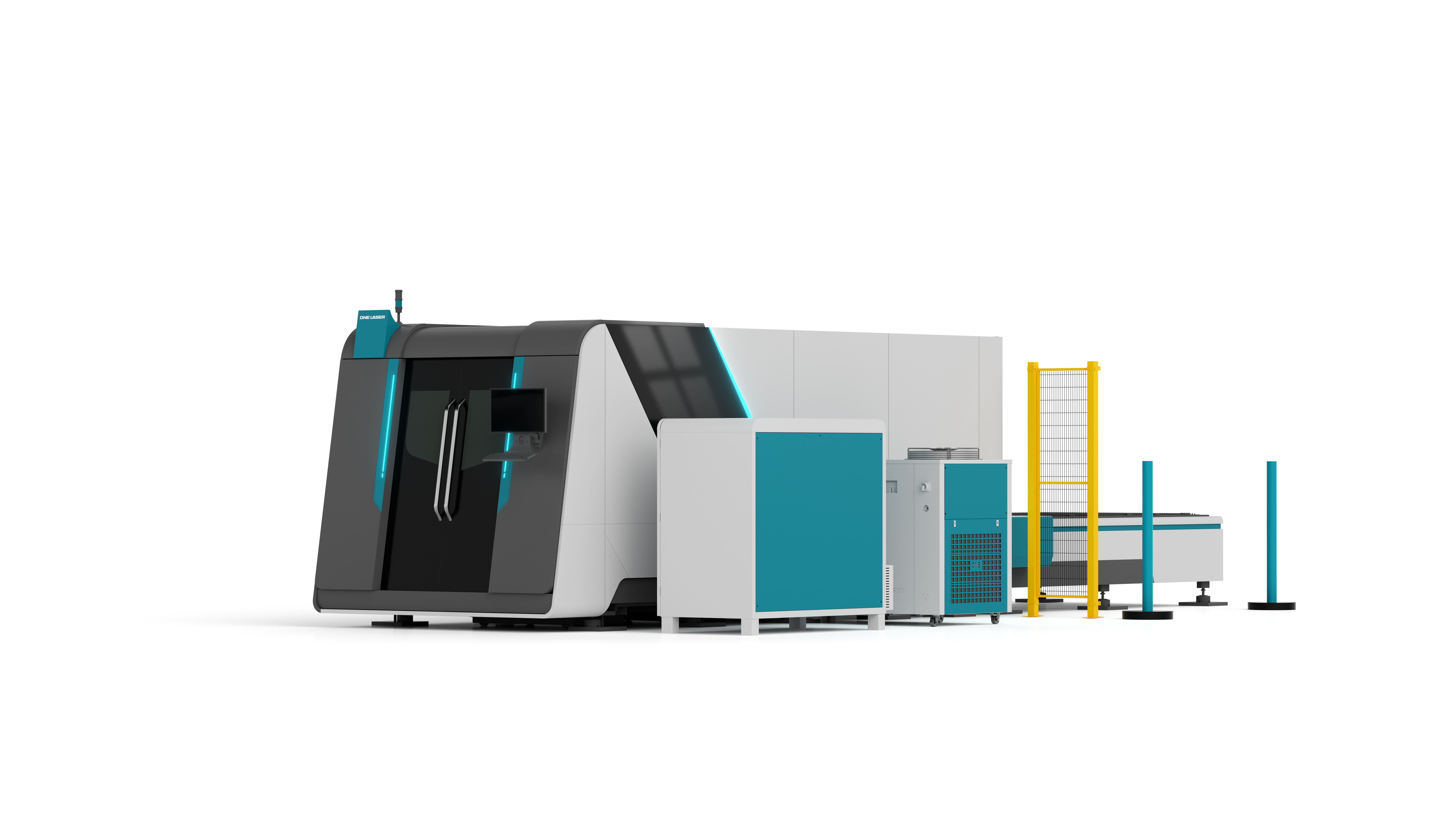
| Round, square and structural steel tube | Oxygen or nitrogen depending on downstream welding | Consistent edge for downstream operations | 3–30 kW configurable range matched to wall thickness | Zero-remnant cutting, sealed chucks, synchronized support, automated loading |
| Thin-wall tube and precision profiles | Nitrogen | Tight dimensional tolerance, minimal deformation | Power matched to wall thickness to avoid distortion | ±0.05 mm/m positioning accuracy, anti-vibration support, stable clamping |
8. Step-by-Step: Specifying a Laser Cutting Machine in Six Steps
- Build a thickness map. List every active part by material and thickness, and rank by annual cutting hours rather than by part count. This single document prevents most specification errors.
- Set the power floor from the thick end. Choose the class that handles your thickest routine production plus a defined margin. If thick parts are rare and outsourceable, resist the temptation to buy the maximum class.
- Configure the cutting head for the mix. Confirm lens monitoring, thermal control, anti-collision protection and calibration workflow, and specify bevel capability where parts move straight to welding.
- Set the gas strategy per material and downstream step. Decide which parts need an oxide-free edge and which can be cut fast with oxygen or air, then size gas supply, purity and pressure accordingly.
- Confirm motion, structure and accuracy. Compare positioning accuracy, repeat accuracy, acceleration and positioning speed — and ask what structural measures support them: annealing, vibration damping, cabinet isolation, bed design.
- Validate and verify compliance. Cut your own material on the proposed configuration, measure the parts, and confirm safety and conformity documentation, including ISO 11553-1 and IEC 60825-1 alignment for CE preparation.
9. Use Cases: Where the Parameter Priorities Shift
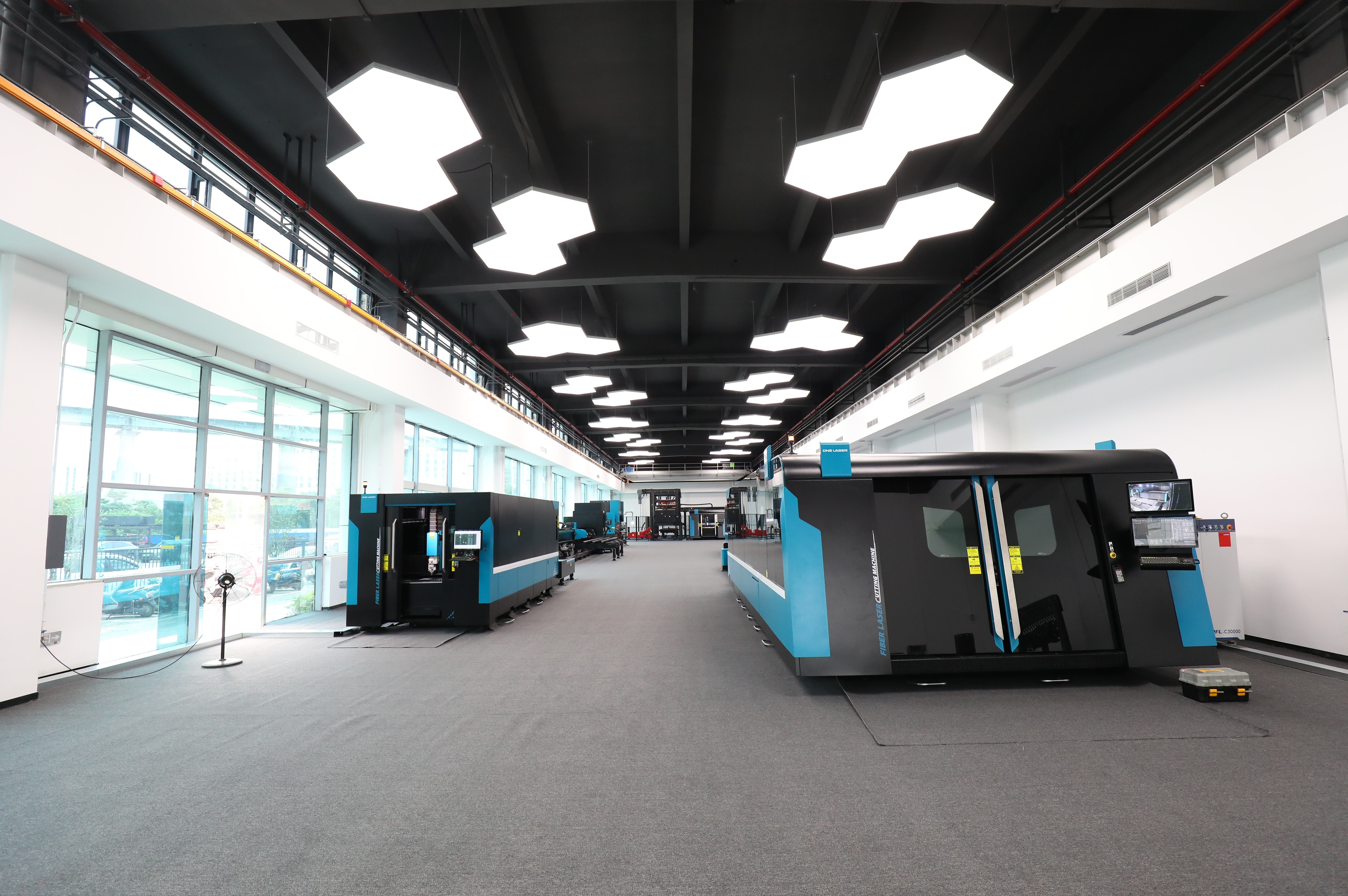
Mixed sheet metal job shop. The mix moves weekly, so the dominant parameters are acceleration, positioning speed and fast changeover rather than maximum power. High-efficiency fiber laser cutting machine configurations — such as a 7 Hz platform specified at 2.0G maximum simultaneous acceleration — protect margins on short runs.
Agricultural and construction machinery fabrication. Heavy sections, tubes and plates dominate. Power for thick plate and a tube platform with stable clamping and zero-remnant cutting matter more than peak positioning speed; material utilisation directly affects cost per unit.
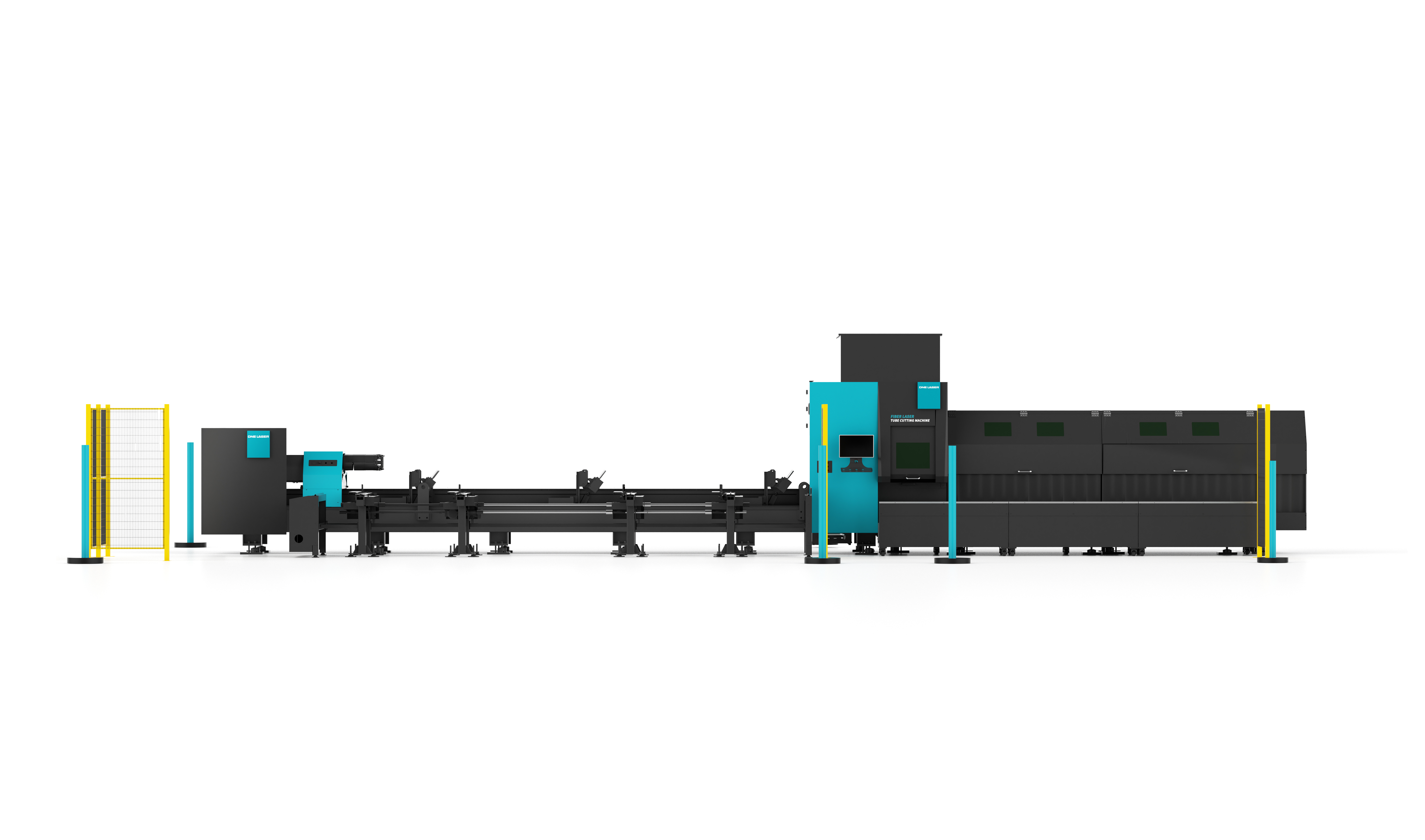
Automotive and aerospace precision tube work. Tolerance is the buying driver. DNE's tube platform is described as suitable for tube manufacturing in agricultural machinery, automotive and construction machinery, as well as aerospace precision tube processing, with positioning accuracy of ±0.05 mm/m and automated loading cycle time of ≤ 30 seconds.
Batch processing of structural and irregular tubes. Compatibility with various types of irregular tubes and profiles — supported by fully enclosed chucks, synchronized multi-chuck clamping and zero-remnant cutting that lifts material utilisation by more than 20% — is the deciding capability, because scrap on irregular profiles is expensive.
10. Platform Comparison: Published Technical Data
The table below compares DNE LASER platforms using only published technical figures, so that the parameter differences described above can be read side by side.
| Published parameter | D-soar (fiber laser cutting machine) | D-Speed (high-speed platform) | D-Tube (tube laser cutting machine) |
|---|---|---|---|
| Laser power range | Up to 30 kW | Not published in the compared configuration | Configurable 3–30 kW |
| Cited maximum material capability | Carbon steel / stainless steel up to 60 mm | Optimised for 1–3 mm sheet efficiency | Round, square, thin-wall and irregular tubes and profiles |
| Positioning accuracy | ±0.05 mm | — | ±0.05 mm/m |
| Repeat positioning accuracy | ±0.03 mm | — | — |
| Maximum simultaneous positioning speed | 120 m/min (X/Y) | 150 m/min | — |
| Acceleration | 1.2G | 2.0G (maximum simultaneous) | 1.0G (positioning) |
| Efficiency characteristics | Higher energy conversion efficiency and processing speed than conventional cutting equipment; Z-axis speed increased by 33% | +22% overall cutting efficiency for 1–3 mm sheet; 7 Hz configuration 15% higher than 5 Hz models | Cutting efficiency improved by more than 50%; automated loading cycle ≤ 30 s |
| Structure and reliability measures | Annealed bed and gantry; self-developed cutting head; multi-parameter monitoring and alarm systems | Bed deformation resistance +37%; structural strength +51%; automation setup and commissioning time reduced by 70–90% | Fully enclosed chucks; annealed deformation-resistant bed; synchronized multi-chuck clamping; zero-remnant cutting raising material utilisation by more than 20% |
| Typical fit | Mid-to-high-end precision and high-speed sheet cutting from thin to thick plate, large-scale production | High-efficiency thin and medium sheet production lines | Agricultural, automotive and construction machinery tubes; aerospace precision tube processing; structural and irregular tube batches |
11. Verification Checklist Before You Sign
- Test cuts on your own material at your thinnest and thickest routine thickness, using the proposed power, head and gas combination.
- Measured accuracy check on the finished parts — not a datasheet reading.
- Demonstration of lens protection monitoring, temperature and gas-pressure alarms, and the anti-collision plus one-click calibration workflow.
- Confirmation of factory performance testing and precision calibration before delivery, plus packaging and transport protection for the optical components.
- Safety hardware inspection: sliding doors, radiation-proof windows, interlocks, and conformity documentation aligned with ISO 11553-1 and IEC 60825-1.
- Written maintenance scope: standardized consumables, diagnostics access without entering the main machine, remote monitoring and scheduled recalibration.
12. FAQ
Which safety standards should a laser cutting machine comply with for CE marking?
Laser processing machines prepared for international trade and CE marking are generally assessed against ISO 11553-1 for general safety requirements and IEC 60825-1 for laser product classification. Beyond documentation, verify the physical protection on the machine itself — safety sliding doors and radiation-proof windows compliant with CE standards, safety interlocks, and a documented factory performance test and precision calibration before shipment. This matters to buyers because a machine that cannot be commissioned legally costs more than a specification difference.
How much thickness can a fiber laser cutting machine cut at a given power?
Power sets the boundary of the envelope, but thickness capability is delivered by the whole configuration. In DNE LASER's range, the D-soar fiber laser cutting machine offers a power range up to 30 kW and can cut carbon steel or stainless steel up to 60 mm, compared with conventional mid- and low-power laser machines. The tube platform is configurable across 3–30 kW. When comparing machines, ask what thickness the head, gas pressure, piercing process and nesting logic are configured for at that wattage — the same power rating can produce very different results on thick plate.
Which assist gas gives the most economical cost per part?
The cheapest gas is the one that eliminates a downstream operation. Oxygen is normally used on carbon steel, where the exothermic reaction supports faster cutting and leaves an oxidised edge that is acceptable if the part will be ground, painted or covered. Nitrogen produces an oxide-free edge that suits stainless steel and aluminium going directly to welding or visible surfaces, but requires suitable purity and pressure. Compressed air is widely used on thin sheet where edge appearance can be traded for cost. Argon is reserved for special materials. Because gas cost per part depends on pressure, nozzle and duty cycle, the right comparison is a test cut on your own parts, not a gas price list.
How can I validate machine parameters before placing an order?
Send sample sheets or tubes that cover your thinnest and thickest routine production items and request test cuts at the proposed power, head and gas configuration. Measure the results against your tolerance — for reference, DNE reports ±0.05 mm positioning accuracy and ±0.03 mm repeat positioning accuracy on the D-soar flatbed platform, and ±0.05 mm/m positioning accuracy on the D-Tube platform. Also ask to see the monitoring and alarm functions in operation, and confirm that full-process factory performance testing and precision calibration are performed prior to delivery.
What information do I need to send to receive a matched configuration and quotation?
Prepare five items: the material types you cut, your thickness or wall-thickness range, the tube profiles involved (round, square, thin-wall or irregular), your annual or monthly cutting volume, and the edge requirement for each part family (welding, painting or visible surface). With those inputs a supplier can propose power class, head configuration, gas strategy and machine platform together rather than quoting a bare wattage. DNE LASER accepts sample cutting and configuration requests through eileen.yan@dne.global or WhatsApp at +86 136-7014-5102; the company's 2026 product overview is available here: DNE Laser company and product brochure (PDF). The full product range and technical details are published at www.dne.global.
13. Conclusion: Order the Parameters, Not the Wattage
A laser cutting machine is bought as a system. Power sets what is possible; the cutting head decides how repeatably it happens; the assist gas decides the edge and a large share of the running cost; motion, structure and safety hardware decide whether those numbers hold after the first month of production. Buyers who evaluate in that order tend to buy the machine their work actually needs — while buyers who compare wattage alone tend to pay for capacity they never use or discover a thickness ceiling they did not plan for.
Start with your thickness map, cut your own samples, and verify the parameters you were quoted. DNE LASER's platform data — up to 30 kW and 60 mm on the D-soar, 2.0G acceleration on the high-speed platform, and ±0.05 mm/m accuracy on the D-Tube — is published precisely so that those comparisons can be made on facts rather than on impressions.
Have Questions or Need More Details?
Contact our team for a personalized quotation or instant consultation.
Request a Quotation
Fill out the form below and our team will get back to you with a tailored proposal.
WhatsApp Direct Chat
Prefer to chat in real-time? Message us on WhatsApp for instant assistance & quick answers.
- Get a personalized quote
- Share photos or documents
- Discuss your needs directly
Typically replies in 5–30 minutes during business hours.