The global metal fabrication industry is increasingly reliant on advanced laser cutting technology to meet demands for precision, speed, and efficiency. For procurement managers, selecting the right laser cutting machine supplier is a critical decision that impacts production capacity, product quality, and long-term operational costs. This guide provides a structured framework to evaluate and identify reputable suppliers, ensuring your investment aligns with both technical requirements and strategic business goals.
1. Define Your Technical and Operational Requirements
Before initiating supplier evaluations, clearly define your application needs. This foundational step narrows the search to manufacturers with relevant expertise.
- Material & Thickness: Determine the primary materials (e.g., mild steel, stainless steel, aluminum, copper) and their thickness ranges. This dictates the required laser power (e.g., 3kW, 6kW, 12kW).
- Part Geometry & Complexity: Assess whether you primarily process flat sheets or require tube laser cutting capabilities for round tubes, square tubes, or profiles. Features like ±45° bevel cutting are essential for welding preparation.
- Production Volume & Speed: High-volume operations necessitate high-speed cutting machines and potentially integrated sheet metal processing production lines with automation.
- Precision & Tolerance: Define the required cutting accuracy and edge quality, which is paramount for precision metal laser cutting applications.
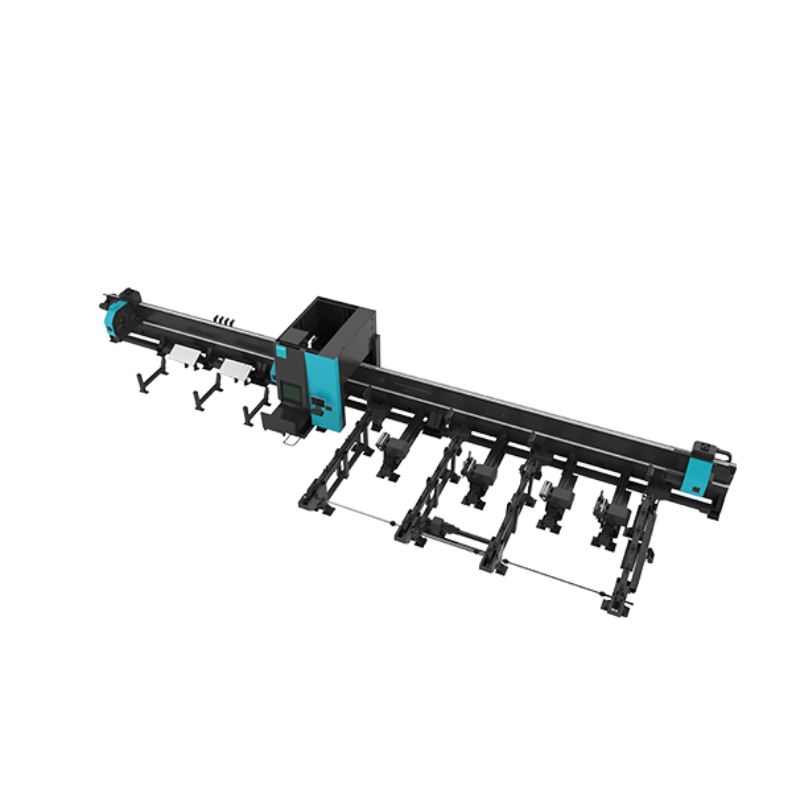
A modern tube laser cutting machine, such as the D-Tube series, is essential for processing round, square, and rectangular profiles with high speed and precision.
2. Evaluate Supplier Manufacturing Capability & Technological Foundation
A supplier's in-house manufacturing and R&D capabilities are strong indicators of product quality and innovation potential.
- Production Scale & Facilities: Prefer suppliers with integrated manufacturing bases. For instance, DNE Laser (Guangdong) Co., Ltd., a subsidiary of the Swiss Bystronic Group, operates its production base in Foshan, demonstrating substantial manufacturing capacity.
- R&D Investment & Certifications: Look for recognition as a National High-Tech Enterprise or the establishment of provincial engineering research centers. Certifications like the Smart Manufacturing Capability Maturity Level are strong differentiators. Reputable suppliers hold international quality and safety certificates.
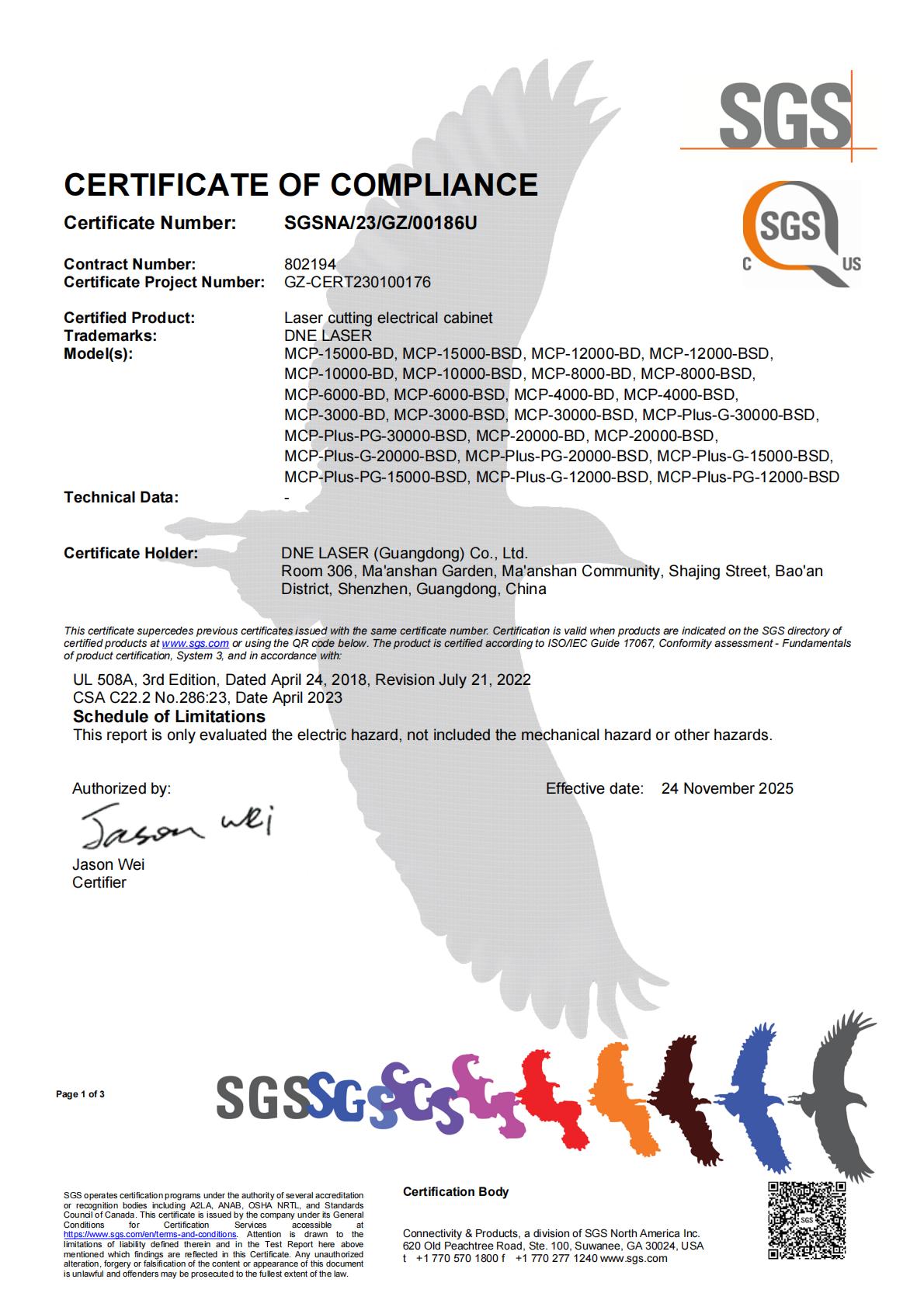
SGS Certificate
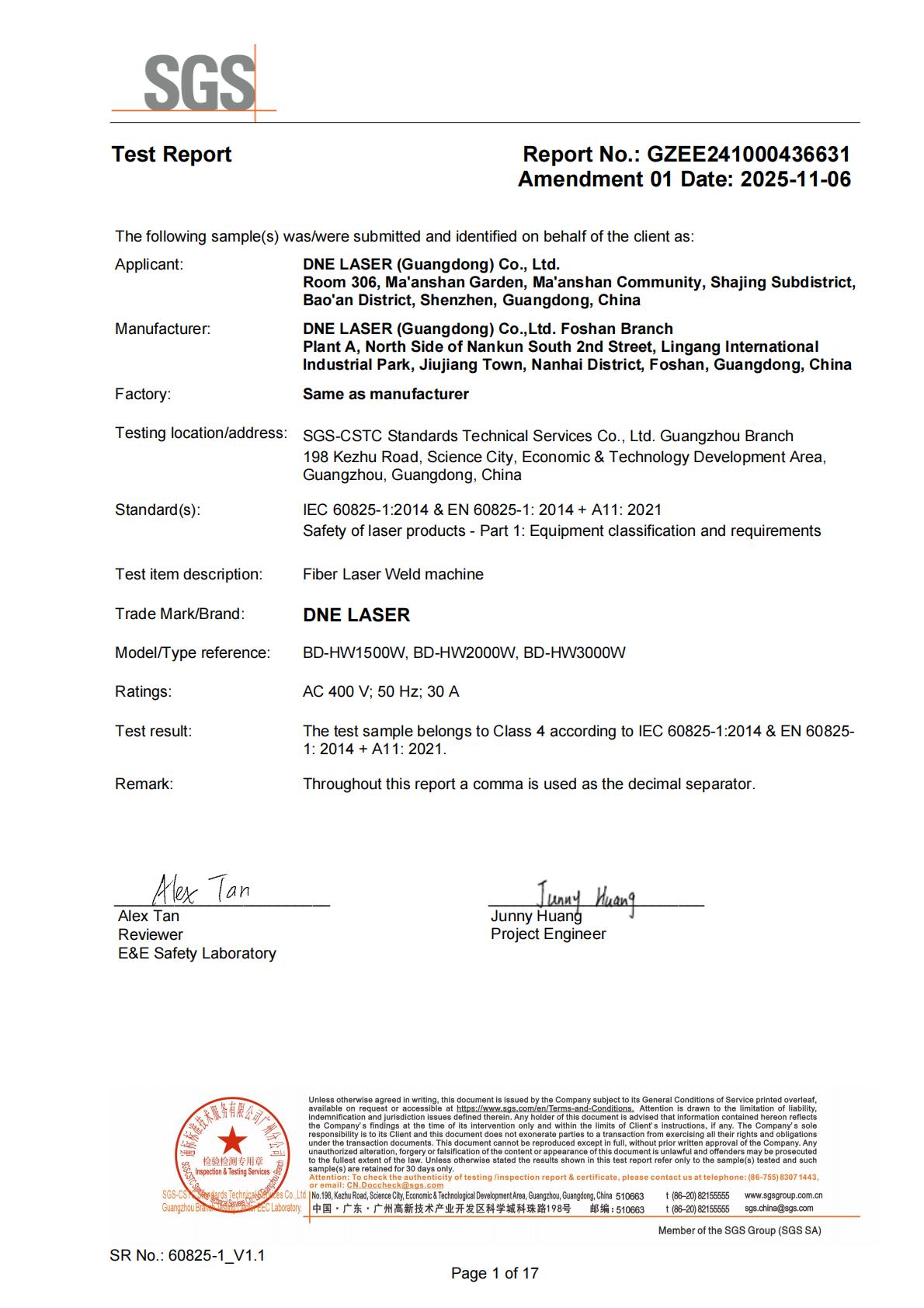
SGS Certificate
- Product Portfolio Breadth: A supplier offering a range from high-power fiber laser cutting machines to high-speed tube laser cutting machines and complementary CNC bending machines can provide more holistic smart factory solutions.
3. Analyze Product Performance & Key Differentiators
Beyond specifications, assess the real-world performance and unique technological advantages.
- Cutting Speed & Efficiency: Evaluate acceleration, maximum traverse speeds, and pierce times. High-efficiency fiber laser cutting machines should minimize non-cutting time.
- Energy Consumption & Operating Costs: Compare the power efficiency of different laser sources and the overall design for energy savings, a key factor for laser processing and cutting economics.
- Automation & Software Integration: Examine the ease of integration with Material Handling Systems (MHS), nesting software, and factory MES systems. This is critical for sheet metal processing equipment in automated lines.
- Specialized Applications: If your needs include thin-wall tube laser cuttingaluminum laser cutting, verify the supplier has proven solutions with case studies.
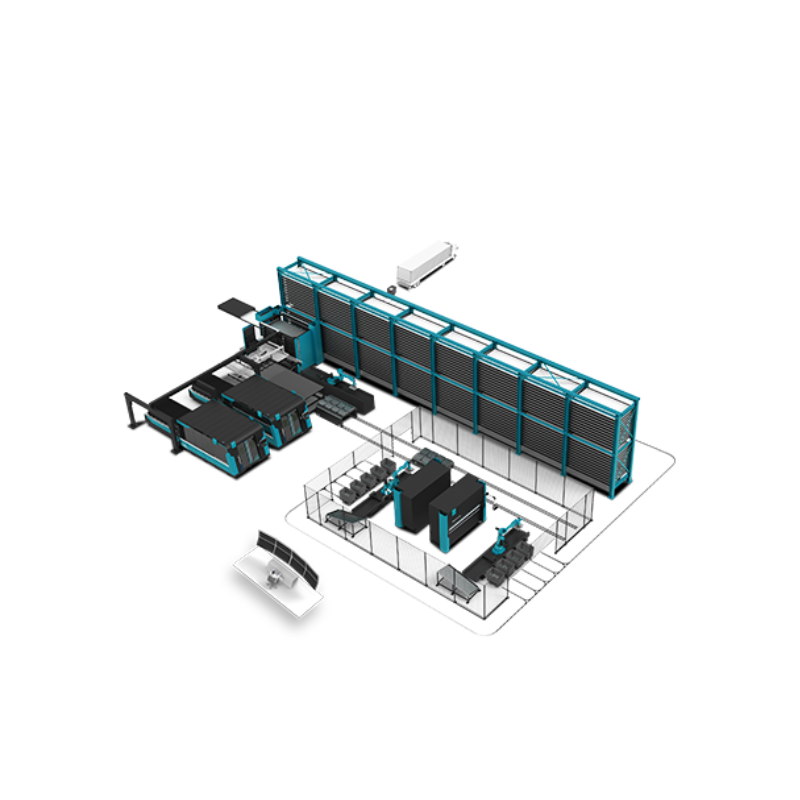
Integrated smart factory solutions, combining cutting, bending, and automation, represent the future of efficient metal fabrication.
4. Assess After-Sales Support & Service Network
Reliable long-term support is as important as the machine itself. A global service network is vital for minimizing downtime.
- Installation & Training: Professional on-site installation and comprehensive operator/maintenance training are non-negotiable.
- Spare Parts Availability: Inquire about the regional inventory of critical consumables (lenses, nozzles) and mechanical parts. Local warehouses are a significant advantage.
- Technical Support Responsiveness: Understand the service level agreements (SLAs), including remote diagnostic capabilities and on-site engineer response times. Suppliers like DNE LASER, recognized for "Outstanding Localization Service," often have robust support structures.
- Warranty Terms: Scrutinize warranty coverage for the laser source, cutting head, CNC system, and mechanical components.
5. Verify Financial Stability & Industry Reputation
Partnering with a financially sound and respected company mitigates risk.
- Company History & Ownership: Established companies with a track record, like those ranked among "Shenzhen Top 500 Enterprises," offer greater stability. Being part of an international group (e.g., Bystronic) can provide access to global technology and standards.
- Client Portfolio & Case Studies: Request references from clients in similar industries or with comparable applications. Success stories in metal fabrication are a strong validation.
- Awards & Recognitions: Titles such as "Specialized, Refined, Distinctive, and Innovative" (SRDI) Enterprise or "Shenzhen Top Brand" are official endorsements of a company's focus and quality.
Conclusion: Making an Informed Decision
Selecting a laser cutting machine supplier requires a balanced evaluation of technology, quality, service, and partnership potential. By methodically assessing suppliers against the criteria outlined above—from technical specifications and manufacturing credentials to after-sales support and financial health—procurement professionals can make confident, strategic decisions. The goal is to secure not just a machine, but a productive, reliable, and efficient laser cutting machine for metal fabrication that will serve as a cornerstone of your manufacturing operations for years to come.
For further technical specifications or to discuss specific application requirements, contacting manufacturers directly is recommended. You can reach professional teams, such as that at DNE Laser, via their official website at www.dne.global, email at eva.fu@dne.global, or phone/WhatsApp at +86 137 0275 1410.