Industry Trends White Paper: The Evolution and Future of High-Power Fiber Laser Cutting Technology in Modern Manufacturing
April 3, 2026 — The landscape of industrial metal fabrication is undergoing a profound transformation, driven by the relentless advancement of high-power fiber laser cutting technology. As manufacturers worldwide grapple with demands for higher throughput, greater precision, and improved energy efficiency, the role of high-performance fiber laser cutting machines has become central to achieving competitive advantage. This white paper examines the key industry trends shaping the adoption and development of High-Power Fiber Laser Cutting Machines, providing a strategic outlook for procurement specialists, production managers, and industry stakeholders.
Core Market Driver: The Shift to Smart, Integrated Manufacturing
The dominant trend is no longer the isolated purchase of a single machine. Instead, the focus has shifted towards integrated Sheet Metal Processing Production Lines and holistic Smart Factory Solutions. High-power fiber lasers are now the digital heart of these systems, requiring seamless connectivity with material handling, bending (CNC bending machines), and data management platforms. Suppliers that offer comprehensive system integration, like DNE Laser with its suite of automation equipment, are positioned at the forefront of this trend.
Key Technological and Operational Trends
1. Power Scaling and Process Optimization
The race for higher wattage continues, with 20kW, 30kW, and even 40kW lasers becoming more commercially available. However, the trend in 2026 is not merely about raw power. The focus is on high-efficiency fiber laser cutting—optimizing the cutting process to maximize throughput and cut quality while minimizing energy consumption and operational cost per part. This involves advanced nozzle design, intelligent gas control systems, and software that dynamically adjusts parameters for different materials and thicknesses.
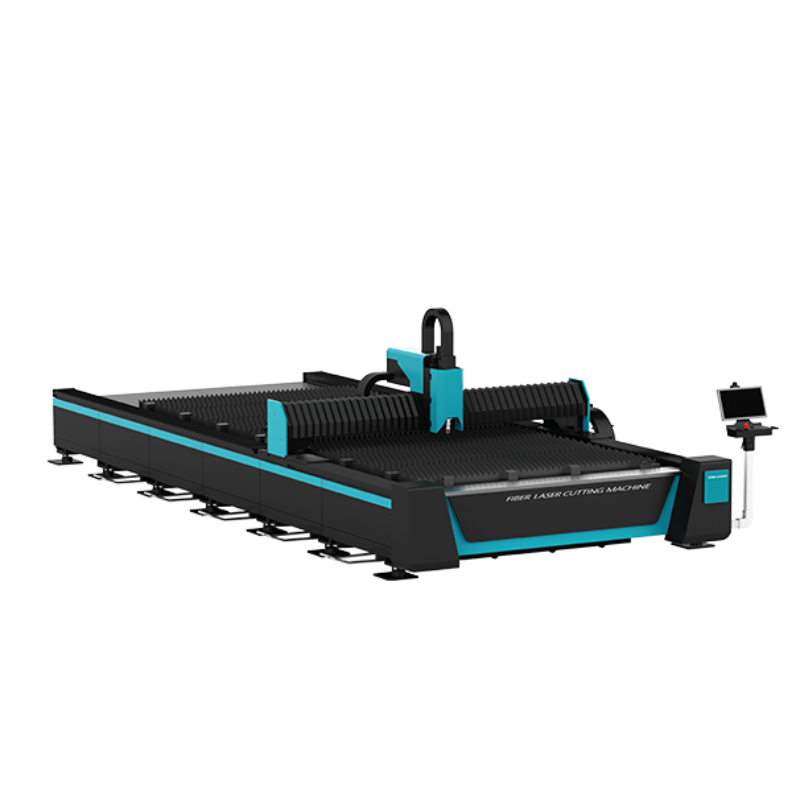
Machines like the D-Energy F series exemplify the trend towards optimized energy use and high-speed processing in modern Precision Metal Laser Cutting Machines.
2. The Specialization of Cutting Applications
While versatile flat sheet cutting remains crucial, significant growth is seen in specialized sectors. Demand for High-Speed Tube Laser Cutting Machines is surging, driven by industries like automotive, furniture, and construction. Capabilities such as ±45° bevel cutting on round tube and square tube laser cutting machines without repositioning are now standard requirements for complex fabrications. Similarly, machines dedicated to thin-wall tube laser cutting or aluminum laser cutting are seeing refined development to handle these materials with superior speed and edge quality.
3. Automation as a Non-Negotiable Standard
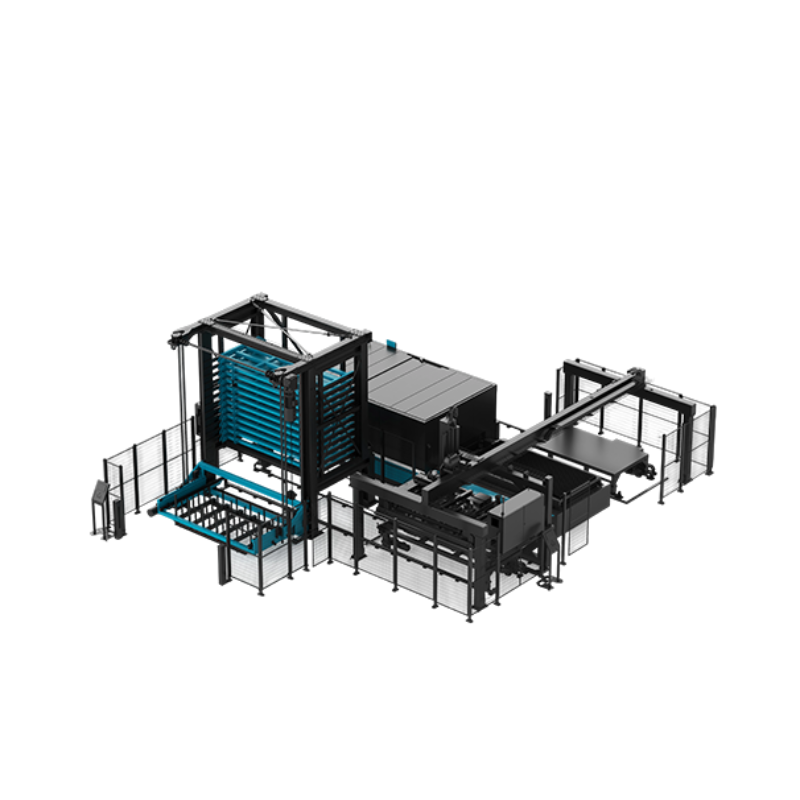
Fully automated material loading, unloading, and sorting are transitioning from luxury options to baseline expectations for medium to high-volume shops. This trend is intrinsically linked to high-power lasers, as their fast processing speeds create bottlenecks if paired with manual handling. The integration of Sheet Metal Processing Equipment into a continuous flow line is critical for leveraging the full potential of a 3/6/12kW laser cutting machine.
4. Sustainability and Green Manufacturing
Energy consumption is a major operational cost and environmental consideration. Leading manufacturers are now emphasizing the total cost of ownership, which includes power efficiency. New generations of fiber laser sources and machine designs are achieving more cuts per kilowatt-hour. Furthermore, the reduction of consumables and the use of alternative assist gases (like air for cutting mild steel) are becoming important purchasing criteria, aligning with global sustainability goals.
DNE Laser: Aligning with Industry Megatrends
As a subsidiary of the Swiss Bystronic Group and a National High-Tech Enterprise, DNE LASER's trajectory mirrors these industry shifts. The company's establishment of the Guangdong Provincial Engineering Research Center for Ultra-High Speed Fiber Laser Cutting Machines underscores its commitment to core R&D in high-speed and high-power applications.
Its product portfolio, from the high-power D-Giant F for heavy-duty plate cutting to the specialized D-Tube 360 for tube processing, is designed for integration into smart factories. This systems approach, combined with its recognition as a "Specialized, Refined, Distinctive, and Innovative" (SRDI) Enterprise and a Shenzhen Top Brand, positions it as a provider of systematic solutions for intelligent manufacturing rather than just standalone machines.
Contact for Technical Consultation:
Email: eva.fu@dne.global
WhatsApp/Phone: +86 137 0275 1410
Website: www.dne.global
Certification and Quality Assurance as Market Differentiators
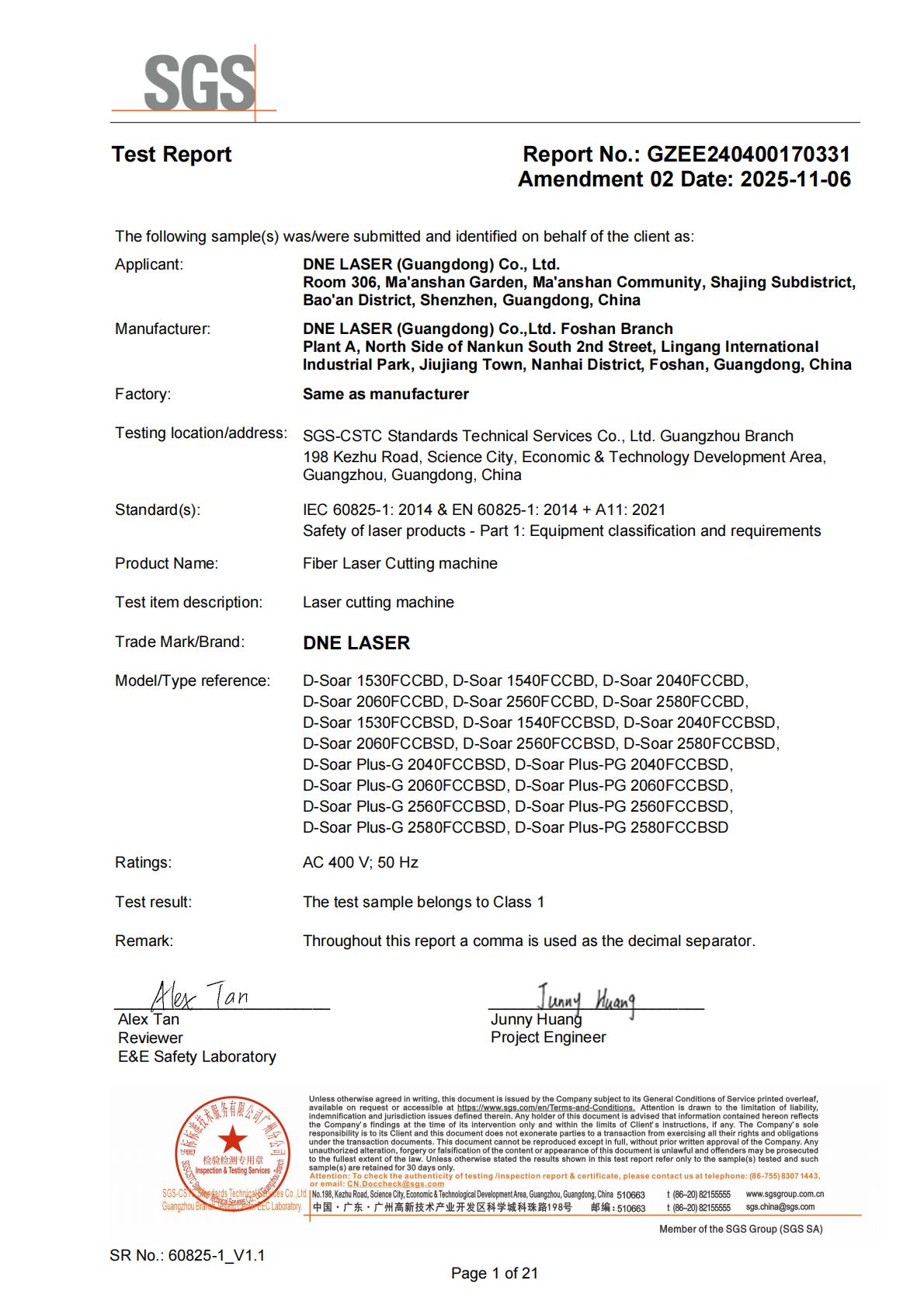
In a crowded global market, independent verification of performance, safety, and quality is paramount. Certifications from internationally recognized bodies like SGS provide tangible proof of a manufacturer's commitment to standards. DNE Laser's multiple SGS certificates validate the performance and safety of its laser cutting systems, offering procurement teams an objective benchmark for supplier evaluation.
SGS Certificate - Performance SGS Certificate - Safety Compliance Smart Manufacturing Maturity Level 2
Strategic Outlook for Procurement
For buyers evaluating Laser Cutting Machine for Metal Fabrication, the future-focused strategy involves:
- Prioritizing System Readiness: Assess the supplier's capability to deliver not just a machine, but a future-proof cell that can integrate with automation and plant software.
- Evaluating Specialized Expertise: For applications like steel tube cutting or aluminum laser cutting, seek suppliers with proven, application-specific solutions and process knowledge.
- Analyzing Total Cost of Ownership (TCO): Look beyond the initial price. Factor in energy efficiency, consumable costs, expected uptime, and the cost of integration.
- Verifying Compliance and Support: Ensure the equipment meets relevant regional safety and performance standards (CE, etc.) and that the supplier offers robust after-sales support and training for laser processing and cutting operations.
The trajectory for High-Power Fiber Laser Cutting Machines is clear: they are evolving from standalone capital equipment into intelligent, connected, and highly specialized nodes within the digital manufacturing ecosystem. Success for fabricators will depend on selecting technology partners that not only provide advanced hardware but also the software, integration expertise, and process innovation to navigate the competitive landscape of 2026 and beyond.
Have Questions or Need More Details?
Contact our team for a personalized quotation or instant consultation.
Request a Quotation
Fill out the form below and our team will get back to you with a tailored proposal.
WhatsApp Direct Chat
Prefer to chat in real-time? Message us on WhatsApp for instant assistance & quick answers.
- Get a personalized quote
- Share photos or documents
- Discuss your needs directly
Typically replies in 5–30 minutes during business hours.