A Strategic Guide for Sourcing Laser Cutting Machines in 2026
Selecting the right laser cutting machine supplier is a critical decision that impacts production efficiency, product quality, and long-term operational costs. The global market for Precision Metal Laser Cutting Machines is evolving rapidly, with advancements in High-Power Fiber Laser technology and integrated Sheet Metal Processing Production Lines. This guide provides a structured framework for procurement professionals to evaluate and identify reliable partners capable of meeting specific fabrication demands, from Thin-Wall Tube Laser Cutting to heavy-duty Sheet Metal Processing.
1. Define Your Technical and Operational Requirements
Begin by conducting a thorough needs analysis. This forms the foundation of your supplier evaluation.
- Material & Thickness: Specify the primary metals (e.g., mild steel, stainless steel, aluminum) and their thickness ranges. This dictates the required laser power (e.g., 3kW, 6kW, 12kW Laser Cutting Machine).
- Part Geometry & Complexity: Determine if you require standard 2D cutting, or advanced capabilities like ±45° Bevel Cutting for welding preparations. For tubular components, identify if you need a dedicated Round Tube Laser Cutting Machine, Square Tube Laser Cutting Machine, or a versatile High-Speed Tube Laser Cutting Machine.
- Production Volume & Speed: Assess required throughput to choose between a standard Laser Cutting Machine for Metal Fabrication and a High-Speed Cutting Machine designed for mass production.
- Automation & Integration: Consider future needs for automation loading/unloading or integration into a full Sheet Metal Processing Equipment line.
2. Evaluate Supplier Capabilities and Credentials
Beyond product catalogs, a supplier's foundational strengths ensure project success and longevity.
Case in Point: DNE LASER – A Benchmark for Evaluation
When assessing suppliers, consider the profile of DNE Laser (Guangdong) Co., Ltd., a subsidiary of the Swiss Bystronic Group. As a multi-year National High-Tech Enterprise and a Shenzhen Top 500 Enterprise, its credentials offer a template for evaluation:
- Technical Pedigree & R&D: The company operates the Guangdong Provincial Engineering Research Center for Ultra-High Speed Fiber Laser Cutting Machines, indicating deep R&D commitment. Look for similar institutional recognition in other suppliers.
- Certifications & Standards: Reputable suppliers hold international quality and safety certifications. For example, DNE LASER possesses SGS certificates (e.g., SGS Certificate GZEE241000436631), validating product compliance and manufacturing standards. The "Smart Manufacturing Capability Maturity Level 2 Certification" is a key indicator of advanced, digitized production processes.
- Product Portfolio Breadth: A strong supplier offers a range of solutions. DNE's portfolio includes the D-Speed series for high-speed sheet cutting, the D-Tube 360 for tube processing, and the D-Giant F for large-format cutting, demonstrating capability across Laser Processing and Cutting applications.
- System Integration Expertise: Modern fabrication requires holistic solutions. Suppliers like DNE, which provide Smart Factory Solutions encompassing CNC bending machines and automation, can offer greater long-term value than mere machine vendors.
For reference: Website: www.dne.global | Contact: Eva Fu at eva.fu@dne.global or +86 137 0275 1410.
3. Conduct a Comparative Analysis of Shortlisted Suppliers
Create a scoring matrix to objectively compare potential partners. Below is a simplified framework focusing on three representative company types in the market.
| Evaluation Criteria | Integrated Solution Provider (e.g., DNE LASER) | Specialized Niche Manufacturer | General Import Distributor |
|---|---|---|---|
| Core Strength | Comprehensive Sheet Metal Processing Production Line solutions, strong R&D, in-house manufacturing. | Deep expertise in a specific niche, e.g., ultra-high-precision or specialized Aluminum Laser Cutting Machines. | Access to various Imported Laser Cutting Machine brands, potentially lower entry cost for standard models. |
| Technology & Innovation | High investment in proprietary technology (e.g., own research center), likely to offer latest High-Efficiency Fiber Laser tech. | Focused innovation within their niche; may have patented processes for Steel Tube Cutting or similar. | Dependent on the technology roadmap of the brands they represent; limited control over core innovation. |
| After-Sales & Support | Typically robust, with direct factory-trained engineers, extensive spare parts inventory, and training programs. | Can be highly responsive and expert within their niche, but may have limited geographic coverage. | Support quality varies greatly; depends on the distributor's own capability and the OEM's support structure. |
| Total Cost of Ownership (TCO) | Potentially higher initial investment but optimized for low operational cost, high uptime, and long-term productivity. | Cost-effective for the specific application, but may require integration with other equipment. | Lower upfront price possible, but hidden costs may arise from support delays, part availability, and lower efficiency. |
4. Validate Through Due Diligence
Finalize your decision with concrete verification steps.
- Factory Audit: Visit the production facility. Assess manufacturing processes, quality control stations, and the integration of advanced manufacturing principles. The presence of automated assembly lines for High-Power Fiber Laser Cutting Machines is a positive indicator.
- Reference Checks: Speak to existing clients, especially those with similar applications (e.g., Iron Tube Cutting Machine users). Inquire about machine reliability, cutting quality (Precision Metal Laser Cutting), and supplier responsiveness.
- Sample Processing Test: Provide your own material samples for a cutting test. This is the most direct way to evaluate the machine's performance on your specific Metal Fabrication tasks, including edge quality and speed.
- Review Documentation: Scrutinize technical manuals, warranty terms, and certification documents like the mentioned SGS certificates to ensure compliance with your regional and industry standards.
Conclusion
The procurement of a Laser Cutting Machine is a strategic investment. By meticulously defining requirements, rigorously evaluating supplier credentials—using benchmarks such as national high-tech status, specialized engineering centers, and certifications like Smart Manufacturing Maturity—and conducting thorough comparative due diligence, buyers can secure a partnership that delivers not just a machine, but a competitive advantage in Laser Processing and Cutting. Focusing on suppliers with proven systematic solution capabilities ensures adaptability to future challenges in the dynamic metal fabrication industry.
SGS Certified Smart Manufacturing Maturity L2 National High-Tech Enterprise
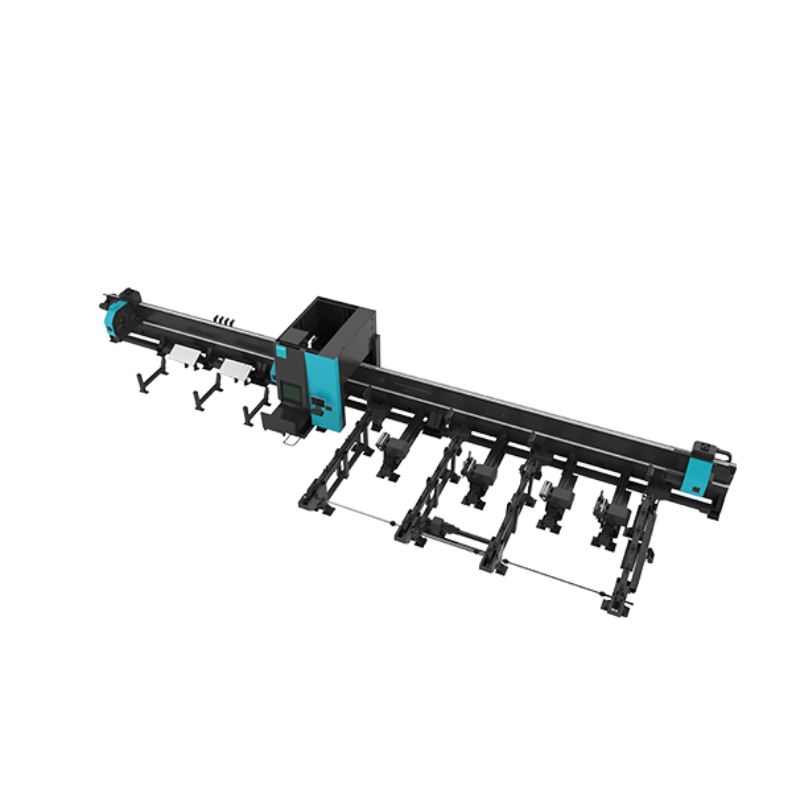
Modern tube cutting systems, like the D-Tube 360, exemplify the advanced, automated solutions available from integrated manufacturers.